5 Best Sustainable Packaging Companies to Evaluate in 2026 (Scored): The Traction Five

A note on this list: This shortlist was generated using Traction AI — our platform for technology scouting across a database of over 1 million verified companies. The query: "Companies enabling sustainable packaging in 2026 — across bio-based materials, recyclability and sortation, packaging design and optimization, and packaging lifecycle and compliance intelligence."

Each profile includes the full Traction AI Company Snapshot — the same output Traction generates for enterprise innovation teams conducting live technology scouting evaluations. These Traction Scores and Company Snapshots were generated by Traction AI against a database of over 1 million verified companies. They are original, first-party assessments that exist nowhere else — not a list compiled from public sources.

Who this post is for: Innovation, sustainability, packaging, and procurement leaders at consumer-goods, food-and-beverage, and retail companies who face a hardening regulatory deadline on packaging — and need a verified, scored shortlist of the companies actually worth evaluating.

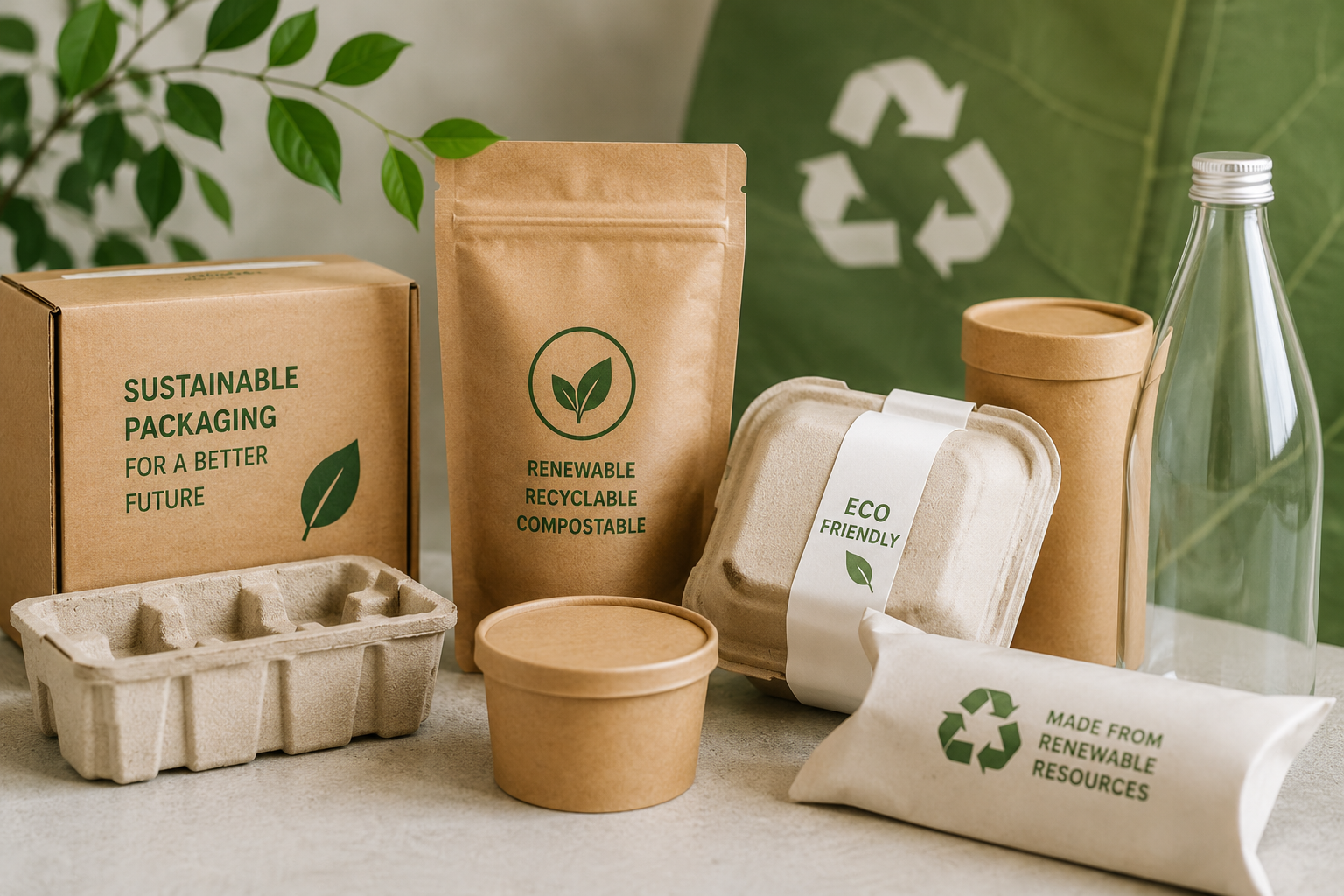
Sustainable Packaging Just Became a Compliance Deadline, Not a Brand Nicety

For most of the last decade, sustainable packaging was a brand decision — a way to signal values to consumers, pursued at the pace each company chose. In 2026, that changed. It became a legal obligation with dates attached.

Extended Producer Responsibility (EPR) laws are now the single largest force driving the market. Across the US, California's SB 54, along with EPR rules in Oregon, Colorado, and Maine, are phasing in requirements that shift the cost and accountability for packaging waste onto the producers who create it. In the EU, the Packaging and Packaging Waste Regulation layers on mandatory recycled-content requirements and single-use restrictions. Together with corporate pledges — many major brands committed to 100% recyclable or reusable packaging by 2025–2030 — these rules have converted sustainable packaging from an aspiration into a compliance program with reporting obligations and financial penalties.

That shift reframes the entire evaluation question. It's no longer "should we explore more sustainable packaging?" It's "which solutions actually let us meet the recycled-content, recyclability, and reporting requirements we're now legally accountable for — and which vendors can prove it?" The sustainable packaging market is projected to grow at a 28–35% compound annual rate through 2030, driven primarily by exactly this regulatory pressure.

Market Signal: Sustainable Packaging

Traction AI Trend Report

A snapshot of what Traction AI's Trend Report surfaces for this market — the same category-level intelligence enterprise teams use to frame an evaluation before shortlisting vendors. The sustainable packaging market is projected to grow at a 28–35% compound annual rate through 2030, driven primarily by Extended Producer Responsibility regulation and consumer demand.

Where It's Heading

  • AI-assisted bio-based materials expected to triple the commercially viable options by 2028
  • Recyclability rates targeted to hit 95%+ accuracy by 2027 in advanced facilities
  • Reusable packaging projected to capture 15–20% of e-commerce packaging by 2029
  • Automated lifecycle assessment becoming standard practice for 60% of major CPG companies

Risks to Weigh

  • Cost premium — sustainable alternatives can run 2–5x conventional plastics, limiting price-sensitive segments
  • Supply-chain immaturity for bio-based feedstocks (seaweed, chitin) constrains scaling
  • Greenwashing scrutiny and fragmented, shifting compliance rules across jurisdictions

Want this for your market? Generate instant Trend Reports or a Market SWOT Analysis on any market or business challenge you want to analyze.

Try Traction AI Free

The five companies below were surfaced by Traction AI from a database of over 1 million verified companies and scored across scalability, security and compliance, market validation, financial stability, product maturity, and operational execution risk. They span the full response to the problem: replace the material, recover and recycle it more intelligently, and measure and prove compliance. Some are materials-science innovators; others apply AI to recycling and lifecycle analysis. Together they map what a credible sustainable-packaging strategy actually requires.

Company 1: Glacier

Why they made the shortlist: Glacier attacks the recycling side of the packaging problem with AI — robotic sorting systems that identify and separate over 70 material categories at industrial speed inside recycling facilities, paired with a brand-facing data platform (DataStream) that gives packaging producers real, SKU-level insight into how their packaging actually performs in the waste stream. That recyclability data is exactly what EPR compliance demands. With deployments at Amazon, Colgate-Palmolive, Waste Connections, and Recology, and backing from Amazon's Climate Pledge Fund, Glacier is one of the two highest-scored companies on this list. Traction Score: 68/100.

Traction AI Company Snapshot

Glacier

endwaste.io

HQ: San Francisco, California, United States  ·  Founded: January 2019  ·  Total funding: $20,500,000  ·  Last round: $16,000,000

AI Recycling Robots Packaging Data (EPR) Amazon · Colgate-Palmolive
68 Traction Score

Glacier develops AI-powered robotic systems that automate the sorting of recyclable materials in waste-management facilities. Its technology identifies and separates over 30 distinct material types — plastics, metals, and complex packaging — at up to 45 picks per minute. Its DataStream platform provides verified, real-time data giving brands SKU-level insight into packaging performance across facilities serving 1 in 10 Americans.

  • AI-powered robotic sorting automating recyclable-material sorting in MRFs — 70+ material categories at 45 picks/minute with 95% uptime
  • Two products: recycling robots for MRFs, and DataStream providing SKU-level packaging insights for brands across facilities serving 1 in 10 Americans
  • Enterprise customers including Amazon, Colgate-Palmolive, Waste Connections, and Recology; $20.5M raised through Series A (April 2025)
  • Trained on 3 billion real recycling images, enabling industry-leading accuracy including a first-to-market Fiber Robot
  • Compact installation with minimal retrofits and ROI within one year, making adoption accessible for MRF operators
  • Dual business model addresses both operational efficiency (MRFs) and ESG/EPR compliance (brands)
  • World's only Fiber Robot and 70+ material-category identification versus competitors' narrower sorting ranges
  • Trained on 3 billion real recycling images, providing superior AI accuracy in complex material identification
  • Dual business model serving MRFs (efficiency) and CPG brands (data for ESG compliance)
  • 95% uptime across sites demonstrates operational reliability for 24/7 operations
  • Compact footprint enabling installation without major retrofits, reducing adoption friction and capital requirements
  • Real-time SKU-level visibility and compliance-ready reports for EPR, FTC Green Guides, and ESG
  • MRF operators face capital constraints and may be risk-averse to new automation despite labor shortages
  • Evolving packaging formats require continuous AI retraining; heavily contaminated or novel packaging may challenge accuracy
  • Competition from established robotic-sorting players (AMP Robotics, Machinex) and traditional equipment makers (Tomra, Bulk Handling Systems)
  • Scaling 24/7 support across a growing installed base requires additional capital
  • EPR regulatory timing uncertainty affects brand-customer demand timing
  • As a 2019 company in growth phase, manufacturing scale-up and enterprise security/compliance documentation need maturing
Traction Score 68/100 — Glacier demonstrates strong enterprise readiness with proven technology deployed at scale (95% uptime, 45 picks/min), validated by tier-1 customers (Amazon, Colgate-Palmolive, Waste Connections, Recology) and backed by Amazon's Climate Pledge Fund. The dual business model serving both MRFs and CPG brands addresses clear needs on both the operational and compliance sides. As a 2019 company still in growth phase, challenges remain in scaling manufacturing, competing with established players, and maturing enterprise security documentation. Best-suited for recycling operators seeking sorting automation and CPG brands needing verified, compliance-ready packaging data.

Generated by Traction AI · October 2026

Best-fit deployment context: CPG and consumer-goods brands that need verified, SKU-level recyclability data to meet EPR, FTC Green Guides, and ESG reporting obligations — and recycling operators (MRFs) seeking to raise recovery rates and cut contamination. The DataStream platform is the entry point for a brand; the robots are for facility operators.

The question to ask first: For our specific packaging SKUs, what recyclability and contamination data can DataStream provide against the facilities our products actually flow through — and how does that map to our EPR reporting obligations?

Company 2: Greyparrot

Why they made the shortlist: Greyparrot is the AI waste-intelligence leader — computer-vision systems that analyzed over 40 billion waste objects in 2024, identifying 89+ waste categories across seven layers of data including financial value, brand identification, and greenhouse-gas emissions. For a packaging producer, that means real-world evidence of how packaging performs for recyclability claims, EPR reporting, and redesign. With Global Cleantech 100 recognition and a strategic partnership with equipment maker Bollegraaf, Greyparrot ties for the top score on this list. Traction Score: 68/100.

Traction AI Company Snapshot

Greyparrot

greyparrot.ai

HQ: London, England, United Kingdom  ·  Founded: January 2019  ·  Total funding: $30,821,577  ·  Last round: $12,800,000

AI Waste Analytics 40B+ Objects Analyzed Global Cleantech 100
68 Traction Score

Greyparrot is the leader in AI waste analytics, applying AI to globally scale recycling and recover more value from waste processing lines. Its waste-intelligence platform — Greyparrot Analyzer and Greyparrot Sync (API) — analyzed over 40 billion waste objects in 2024, capturing waste-stream composition and value across facilities. Its insights help recycling professionals, plant builders, packaging producers, and FMCG brands increase recycling efficiency, comply with regulations, and improve recyclable packaging design.

  • AI-powered waste-analytics platform providing real-time insights into waste-stream composition across recycling facilities
  • Analyzed over 40 billion waste objects in 2024, identifying 89+ waste categories with seven layers of data (financial value, brand identification, GHG emissions)
  • Strong recognition (Global Cleantech 100, WEF Tech Pioneer, CB Insights Top 100 AI); $30.8M+ in funding
  • Serves recycling facilities, plant builders, packaging producers, and FMCG brands with actionable waste intelligence
  • Combines computer-vision AI with financial and environmental analytics for a comprehensive waste-intelligence platform
  • Proven ROI (hundreds of thousands to millions per facility) and measurable environmental impact
  • Proprietary computer-vision technology analyzing waste at scale (40B+ objects in 2024)
  • Multi-dimensional data — seven layers of insight beyond basic categorization (financial value, brand, GHG emissions)
  • Real-time analytics deployed across multiple locations for comprehensive waste-stream visibility
  • Demonstrated ROI with quantifiable financial savings and environmental impact (millions of tonnes diverted)
  • Strategic investment from Bollegraaf Recycling Solutions (€12.8M corporate round)
  • Dual product offering: Analyzer for facility analytics and Sync (API) for integration into broader systems
  • Recycling industry traditionally has low tech adoption and tight margins, requiring strong ROI proof for capital investment
  • Physical hardware installation at facilities creates deployment friction
  • Accuracy dependent on lighting, camera positioning, and waste characteristics; may struggle with heavily soiled or degraded packaging
  • Different categories, reporting requirements, and standards across geographies require localized model adaptations
  • Potential competition from equipment makers adding AI, and MRF operators building in-house solutions
  • Niche market focus limits the broader addressable market; funding is solid but needs more capital for global scaling
Traction Score 68/100 — Greyparrot demonstrates strong product-market fit in an emerging category with proven technology and meaningful scale (40B+ objects analyzed). Early commercial stage, hardware deployment requirements, and a niche market focus limit near-term enterprise readiness for broad adoption. Its computer-vision AI and seven layers of analytics are genuine differentiators, and the Bollegraaf investment provides a distribution channel and sorting-equipment integration. The score reflects a sophisticated, market-ready platform tempered by hardware dependency, limited public security-certification information, and global-scaling capital needs. Best-suited for enterprises with waste/recycling operations or sustainability mandates willing to partner with a growth-stage category leader.

Generated by Traction AI · October 2026

Best-fit deployment context: Packaging producers and FMCG brands that need real-world evidence of how their packaging performs in the waste stream — for recyclability claims, EPR reporting, and design improvement — plus recycling facilities seeking to recover more value. Brand value comes via the data and API; facilities engage through the Analyzer and Bollegraaf equipment integration.

The question to ask first: For the markets and facilities our packaging flows through, what brand-level and recyclability data can Greyparrot provide to support our EPR reporting and recyclable-design decisions — and how is that data accessed and integrated?

Company 3: Sway

Why they made the shortlist: Sway replaces the material itself — patented seaweed-based thermoplastics (TPSea) that match the performance of conventional plastic for flexible packaging (polybags, retail bags, films) while being 100% biobased, USDA Certified Biobased, and home-compostable. Crucially, it's designed to run on existing plastic-manufacturing equipment, lowering the adoption barrier. Recognized as a TIME Best Invention of 2025 with brand partnerships including J.Crew and Burton, Sway is a leading bio-materials innovator — and an earlier-stage company, included as one to watch. Traction Score: 52/100.

Traction AI Company Snapshot

Sway

swaythefuture.com

HQ: Oakland, California, United States  ·  Founded: January 2020  ·  Total funding: $8,100,000  ·  Last round: $5,000,000

Seaweed Bioplastics Home Compostable TIME Best Invention 2025
52 Traction Score

Sway is a material-innovation company scaling compostable solutions for plastic made with seaweed. Its patented products match the performance attributes of conventional plastics and plug into existing infrastructure. Unlike plastic, Sway materials leverage abundant, regenerative resources and compost into healthy soil after use. Its portfolio includes polybags, retail bags, flexible films, and custom packaging built on its TPSea thermoplastic seaweed resin.

  • California-based material-science company developing compostable, seaweed-based replacements for single-use flexible plastics
  • Founded 2020, raised $8.1M across pre-seed and seed rounds from impact-focused investors
  • Core technology is TPSea, a patented 100% biobased thermoplastic seaweed pellet compatible with existing plastic-manufacturing infrastructure
  • Brand partnerships include J.Crew, Burton, Dr. Bronner's, Faherty, Florence, and prAna
  • Recognized with TIME Best Invention 2025, Fast Company World-Changing Idea, and TOM FORD Plastic Innovation Prize
  • Products are home and industrially compostable, breaking down without microplastics or toxic residues
  • Patented seaweed-based thermoplastic (TPSea) that is 100% biobased and USDA Certified Biobased
  • Compatibility with existing plastic-manufacturing equipment enables plug-and-play adoption without new machinery
  • Home and industrially compostable certifications validate end-of-life claims
  • Dual production methods (melt-processable pellets and liquid-based films) leveraging seaweed's natural gelling properties
  • Strong brand recognition through prestigious awards (TIME, Fast Company, TOM FORD) and media coverage
  • Materials achieve performance parity with conventional plastics (tear strength, moisture resistance, printability)
  • Cost premium over conventional plastics (2–5x estimated) limits price-sensitive segments; requires customer education
  • Seaweed supply chain is immature and may constrain scaling; natural material variability can affect consistency
  • Compostability standards vary globally; lack of composting infrastructure limits end-of-life benefits
  • Competition from established bioplastics companies (Novamont, BASF, NatureWorks) and cost-competitive petroleum plastics
  • Modest funding ($8.1M) for scaling capital-intensive seaweed processing and pellet production
  • Small team (~15 employees) creates key-person dependencies and constrains manufacturing/operations scaling
Traction Score 52/100 — Sway demonstrates promising early-stage traction with validated technology, notable brand partnerships, and strong mission alignment, but faces enterprise-readiness gaps including limited financial resources, an immature supply chain, and unproven large-scale deployment. The TPSea technology and compatibility with existing manufacturing are genuine differentiators, and the award recognition and brand roster (J.Crew, Burton, prAna) validate product-market fit. The score reflects strong product and sustainability credentials tempered by modest funding relative to the capital needed to scale manufacturing, supply-chain immaturity, and early-stage execution risk. Best-suited for brands with strong sustainability mandates seeking compostable flexible-plastic alternatives, approached as a pilot.

Generated by Traction AI · October 2026

Best-fit deployment context: Consumer brands in fashion, beauty, food and beverage, and retail with strong sustainability commitments seeking compostable replacements for single-use flexible plastics (polybags, retail bags, films) — particularly those that can adopt via existing manufacturing infrastructure. Best approached as a pilot given the early commercial stage and supply-chain maturity.

The question to ask first: For our specific flexible-packaging formats and volumes, what is the cost premium versus our current material, and can the seaweed supply chain and production capacity support our required volume at consistent quality?

Company 4: Notpla

Why they made the shortlist: Notpla is the Earthshot Prize–winning seaweed-packaging innovator with the broadest bio-materials portfolio on this list — grease-resistant, PFAS-free food containers; the edible Ooho liquid packaging; seaweed-based paper, cutlery, and water-soluble sachets. With over 41 million units already replaced at high-profile venues (Just Eat, Wimbledon, UEFA events) and EU Single Use Plastic Directive compliance verified, Notpla brings the strongest real-world deployment evidence among the materials companies. It's an earlier-stage, materials-and-manufacturing company. Traction Score: 52/100.

Traction AI Company Snapshot

Notpla

notpla.com

HQ: London, England, United Kingdom  ·  Founded: July 2014  ·  Total funding: $48,219,216  ·  Last round: $26,853,712

Seaweed Packaging Earthshot Prize Winner 41M+ Units Replaced
52 Traction Score

Notpla is a sustainable-packaging startup that develops materials derived from seaweed and plants. Its products include a coating for takeaway boxes, film, paper made from seaweed pulp, rigid cutlery, and water-soluble sachets — plant-based alternatives to single-use plastics across food service, events, and personal care, all home-compostable or naturally biodegradable and PFAS-free.

  • Develops seaweed and plant-based packaging — food containers, edible liquid packaging (Ooho), cutlery, paper, and water-soluble sachets
  • Replaced over 41 million single-use plastic units and achieved up to 79% CO2e reduction versus polypropylene
  • Winner of Prince William's Earthshot Prize 2022 and a B-Corp — credible sustainability credentials and recognition
  • Commercially available with customers including Just Eat, Wimbledon, UEFA, London Marathon, and major UK venues
  • Raised approximately $48.2M through Series A rounds backed by reputable impact and sustainability investors
  • Best fit for organizations willing to integrate new materials into existing supply chains for environmental benefit
  • Proprietary seaweed-based material science with patented, plastic-free and PFAS-free technology
  • First coating verified by EU government under the Single Use Plastic Directive — a regulatory-compliance advantage
  • Comprehensive portfolio across multiple packaging categories (containers, cutlery, paper, sachets, edible packaging)
  • Strong environmental metrics: up to 79% CO2e reduction; home-compostable in 6–8 weeks, naturally biodegradable
  • Deployments at high-profile events (Olympics venues, marathons, major stadiums, UEFA)
  • Vertically integrated from material science to product design and manufacturing; Futures Lab R&D for custom development
  • Higher costs than conventional plastics; requires supply-chain adjustments and customer education on disposal/performance
  • Material properties may not match plastics in all applications (moisture sensitivity, temperature range, shelf life)
  • Seaweed sourcing infrastructure underdeveloped globally; geographic concentration of resources
  • Economies of scale not yet achieved; price premium may limit adoption beyond sustainability-focused brands
  • Competition from other seaweed-material startups (Loliware, Sway), plastic-industry lobbying, and alternative materials
  • Capital intensity of materials manufacturing requires continued funding; path to profitability unclear
Traction Score 52/100 — Notpla demonstrates moderate enterprise readiness as a sustainable-materials manufacturer with proven commercial products and notable deployments (Just Eat, Wimbledon, UEFA) and strong environmental impact (41M+ units replaced). The Earthshot Prize, B-Corp status, and EU SUP Directive verification give credible sustainability and regulatory validation, and its portfolio breadth is the widest among the materials companies here. As a materials-science and manufacturing company, it faces scalability constraints, supply-chain dependencies, and cost-competitiveness challenges. Best-suited for enterprises seeking sustainable packaging in food service and events, with pilot or selective deployment recommended before full-scale integration.

Generated by Traction AI · October 2026

Best-fit deployment context: Food-service operators, event venues, food-delivery platforms, and consumer brands in food, beverage, and personal care seeking PFAS-free, compostable packaging — especially for takeaway containers, sachets, cutlery, and event applications. Strongest where the EU Single Use Plastic Directive compliance matters. Best approached as a pilot given cost premium and scaling maturity.

The question to ask first: For our specific application (containers, sachets, film), how do Notpla's materials perform against our shelf-life and moisture requirements, what is the cost premium, and can production capacity meet our volume?

Company 5: Ecochain Technologies

Why they made the shortlist: Ecochain addresses the measure-and-prove side of the problem — lifecycle assessment (LCA) software that makes the environmental footprint of products and packaging accessible and scalable, turning what used to be laborious consulting engagements into repeatable software. For EPR and regulatory reporting (EU CSRD, packaging rules), that LCA data is the compliance artifact. With over a decade in market and multi-industry coverage including packaging, Ecochain is the lifecycle-and-compliance entry on this list — and the earliest-stage on enterprise readiness, included as the one to watch. Traction Score: 52/100.

Traction AI Company Snapshot

Ecochain Technologies

ecochain.com

HQ: Amsterdam, Noord-Holland, The Netherlands  ·  Founded: September 2011  ·  Total funding: $5,607,356  ·  Last round: $3,228,757

Lifecycle Assessment (LCA) Compliance Reporting EU CSRD · EPR
52 Traction Score

Ecochain's mission is empowering companies to make an ongoing sustainable impact by making the environmental footprints of products and production processes accessible. Its life-cycle assessment (LCA) software provides data on the environmental implications of products to producers across industries including packaging, building, apparel, food and beverage, and consumer electronics — making LCAs, historically laborious and expensive, accessible and scalable.

  • LCA software making environmental footprint analysis accessible and scalable across packaging, building, apparel, F&B, and electronics
  • Founded 2011 with ~€5.6M total funding — market longevity but limited capital versus enterprise software peers
  • Addresses a growing regulatory and market need for scalable sustainability data as ESG reporting intensifies
  • Best fit for mid-market companies seeking cost-effective LCA tools; larger enterprises should evaluate integration and security carefully
  • Supports adherence to EU CSRD, CDP, GRI, and other sustainability-reporting frameworks
  • Enables continuous environmental monitoring rather than one-time assessments, producing standardized data for reporting
  • Established market presence since 2011 with over a decade of domain expertise in LCA software
  • Simplified LCA process that historically was laborious and expensive, lowering adoption barriers
  • Multi-industry applicability across packaging, construction, textiles, food/beverage, and electronics
  • SaaS delivery enabling scalability and faster deployment than legacy on-premise solutions
  • Focus on accessible environmental data aligns with increasing regulatory pressure (EU CSRD, SEC climate rules)
  • Product-footprint focus enables companies to meet increasing product-level disclosure requirements
  • LCA still perceived as complex; requires cultural buy-in and sustainability expertise within customer organizations
  • No evidence of advanced AI/ML capabilities; integration ecosystem and API robustness unclear
  • Rapidly evolving sustainability-regulation landscape across multiple jurisdictions
  • Competition from free/low-cost tools, large platform vendors (SAP, Sphera), and specialized sustainability platforms
  • Modest funding (~€5.6M) may limit product-development velocity and market expansion
  • No evidence of SOC 2, ISO 27001, or enterprise-grade security certifications in available materials
Traction Score 52/100 — Ecochain demonstrates moderate enterprise readiness with proven product maturity and market longevity (12+ years), but faces gaps in financial backing, documented security certifications, and transparent market validation. It is suitable for mid-market sustainability initiatives or enterprise pilots, but requires careful due diligence on scalability, security posture, and vendor stability. Its LCA delivery and specialization are strengths; limited evidence of advanced features, enterprise-scale integration, and reference customers constrains the score. Best-suited for mid-market companies seeking cost-effective, scalable lifecycle assessment for product-level disclosure and packaging compliance, approached with vendor due diligence.

Generated by Traction AI · October 2026

Best-fit deployment context: Mid-market consumer-goods, food-and-beverage, and packaging companies that need scalable, repeatable lifecycle assessment to meet EPR, EU CSRD, and product-level environmental disclosure requirements — without the cost of consulting-led LCAs. Larger enterprises should evaluate integration and security posture carefully. Best approached as a pilot.

The question to ask first: For our packaging portfolio and the specific regulations we report under (EPR, CSRD), what LCA data can Ecochain produce, how is it validated for regulatory use, and what is the security and integration posture for our environment?

How to Use This List

A shortlist is the beginning of an evaluation, not the end. The Traction Scores above reflect AI-generated assessments from verified company data — a starting point for structured evaluation, not a substitute for it.

This board is entirely amber, and that is an accurate signal about the category rather than a knock on the companies. Sustainable packaging is an emerging, capital-intensive, and fast-evolving market: the materials innovators (Sway, Notpla) are scaling supply chains that barely existed five years ago, the AI recycling players (Glacier, Greyparrot) are growth-stage companies deploying hardware into a low-margin industry, and the compliance-software layer (Ecochain) is still maturing toward enterprise-grade. An honest board here has no green anchor — and that truthfully reflects a sector where the regulation has outrun the maturity of the solutions. For an early-moving brand, that's the opportunity: the companies are provable now, at pilot scale, ahead of the deadlines.

The five map to the three things a credible sustainable-packaging strategy actually requires, and the right starting point depends on which you need most:

Replace the material — Sway (flexible plastics) and Notpla (food-service and rigid applications) offer compostable, bio-based alternatives. Start here if the mandate is to eliminate problem plastics from specific packaging formats.

Recover and measure it intelligently — Glacier and Greyparrot use AI to improve recycling and, critically, to generate the real-world recyclability and performance data that EPR reporting requires. Start here if the pressing need is proving recyclability and hitting reporting obligations.

Assess and prove compliance — Ecochain turns lifecycle assessment into repeatable software for regulatory disclosure. Start here if the gap is measurement and reporting across a portfolio.

For each company relevant to your mandate:

Step 1 — Match the company to your actual obligation. EPR recyclability reporting, recycled-content requirements, single-use restrictions, or CSRD disclosure — each points to a different company above. Don't evaluate a materials vendor for a reporting gap.

Step 2 — Send a structured RFI. Start with the question to ask first in each profile. For materials companies, weight cost premium, supply-chain capacity, and performance parity heavily. For the data and software companies, weight integration, data validity for regulatory use, and security posture.

Step 3 — Pilot on a contained scope. Every company here is best proven on a limited scope first — a specific packaging format, a defined set of SKUs, a single facility — against a documented baseline, before committing across the portfolio.

Step 4 — Treat the compliance data as the deliverable. For EPR especially, the output that matters is defensible, reportable data. Make sure whatever you pilot produces evidence you can actually file.

Traction AI generates shortlists and Company Snapshots like the ones above on demand — for any technology or solution category, against a verified database of over one million companies.

👉 Run your own sustainable packaging scouting query — try Traction AI free · View Pricing · Schedule a Demo

Frequently Asked Questions

How were these five companies selected?

This shortlist was generated using Traction AI — our platform for technology scouting across a database of over one million verified companies. The query targeted companies enabling sustainable packaging in 2026 across bio-based materials, recyclability and sortation, packaging design, and lifecycle and compliance intelligence. Companies were evaluated using the Traction scoring framework across scalability, security and compliance, market validation, financial stability, product maturity, and operational execution risk.

What is a Traction Score?

The Traction Score is an AI-generated evaluation score produced by Traction AI for every company in an active evaluation. It assesses a company across six weighted dimensions — scalability, security and compliance, market validation, financial stability, product and technology maturity, and operational and execution risk — and produces a score out of 100 with a breakdown of contributing factors. It is designed to give teams a structured, comparable starting point for vendor evaluation — not a definitive recommendation.

Why is sustainable packaging urgent in 2026?

Extended Producer Responsibility (EPR) laws have converted sustainable packaging from a brand choice into a legal obligation with deadlines. In the US, California's SB 54 and EPR rules in Oregon, Colorado, and Maine are phasing in requirements that shift the cost and accountability for packaging waste onto producers; in the EU, the Packaging and Packaging Waste Regulation adds recycled-content and single-use requirements. Combined with corporate pledges for 100% recyclable or reusable packaging by 2025–2030, these rules make choosing and proving sustainable packaging solutions a compliance priority, not an aspiration.

What is Extended Producer Responsibility (EPR) and how does it affect packaging?

Extended Producer Responsibility is a policy approach that makes producers financially and operationally accountable for the end-of-life of the packaging they put on the market — including its collection, recycling, and reporting. For brands, EPR means packaging decisions now carry direct compliance costs and reporting obligations: you must know and often document how recyclable your packaging is and what it's made of. This is why real-world recyclability data (from companies like Glacier and Greyparrot) and lifecycle assessment (from companies like Ecochain) have become as important as the materials themselves.

What types of companies solve the sustainable packaging problem?

There are three broad categories. Materials innovators (like Sway and Notpla) create bio-based, compostable, or otherwise sustainable replacements for conventional plastic packaging. AI-powered recycling and waste-intelligence companies (like Glacier and Greyparrot) improve how packaging is recovered and, crucially, generate real-world data on how packaging performs in the waste stream. Lifecycle and compliance software (like Ecochain) measures environmental footprint and produces the documentation needed for regulatory reporting. A complete strategy usually touches all three: replace the material, recover and measure it, and prove compliance.

Can Traction AI generate a similar shortlist for other sustainability categories?

Yes — Traction AI generates on-demand shortlists and Company Snapshots for any technology or solution category against a verified database of over one million companies. Adjacent categories worth exploring include reusable and returnable packaging systems, carbon accounting and management, supply-chain traceability, circular-economy platforms, and renewable energy procurement. Each query returns verified company profiles with AI Snapshots and Traction Scores. Try it free at tractiontechnology.com/demo-traction-ai.

Related Reading — The Traction Five Series

Each post in the Traction Five series features five real companies — scouted, scored, and profiled by Traction AI from a database of over 1 million verified companies. New editions cover a different sector each month.

About Traction Technology

Traction Technology is an AI-powered innovation management software platform trusted by Fortune 500 innovation teams including Armstrong, Bechtel, Ford, GSK, Kyndryl, Merck, and Suntory. Built on Claude (Anthropic) and AWS Bedrock with a RAG architecture, Traction manages the full innovation lifecycle — from technology scouting and open innovation through idea management, RFI management, and pilot management — with AI-generated Trend Reports, AI Company Snapshots, duplication detection, and decision coaching built in.

Traction AI scouts across a database of over 1 million verified companies — retrieving real, current results rather than generating hallucinated names. One annual subscription at $4,000 gives you the full capabilities of an enterprise innovation team — every module, every AI capability, and unlimited View-Only access for every stakeholder at no additional cost. No setup fee. No data migration charges. Featured in the Gartner Market Guide for AI-Enabled Innovation Management Platforms, February 2026. SOC 2 Type II certified.

Try Traction AI Free · View Pricing · Schedule a Demo · tractiontechnology.com
‍

Open Innovation Comparison Matrix

Feature
Traction Technology
Bright Idea
Ennomotive
SwitchPitch
Wazoku
Idea Management
Innovation Challenges
Company Search
Evaluation Workflows
Reporting
Project Management
RFIs
Advanced Charting
Virtual Events
APIs + Integrations
SSO