
Security Won't Approve Your AI Vendor? The Problem Isn't Security — It's Your Evaluation Process
Who this post is for: Innovation leaders, IT and digital-transformation teams, and the security, procurement, and legal gatekeepers who keep having the same frustrating standoff — the innovation team finds a promising AI-enabled vendor, and it dies in security review.
It's one of the most common and most demoralizing patterns in enterprise innovation.
An innovation team does everything right. They scout the market, find an AI-enabled startup with a genuinely differentiated capability, run a pilot conversation, and build internal excitement. Then the vendor hits security review — and stops. No SOC 2. Unclear where the data goes. Questions about whether the vendor trains its models on customer data. A sub-processor list nobody can produce. Weeks of back-and-forth, and eventually the evaluation quietly dies. The innovation team concludes that "security won't let us innovate with AI." The security team concludes that "innovation keeps bringing us risky vendors."
Both are frustrated. Both are, in a sense, right. And both have misdiagnosed the problem.
The vendor didn't get blocked because security is unreasonable or because the technology is bad. It got blocked because it was evaluated with no structured way to surface the answers security actually needed — and it surfaced them too late, after the innovation team had already committed emotionally to a vendor that couldn't clear the bar. The failure wasn't the "no." The failure was a process that made the "no" inevitable and discovered it last.
This post is about fixing that process — so that the AI vendors worth deploying get deployed, and the ones that genuinely can't meet your security bar get filtered out early, before they cost you months. It's written for both sides of the standoff, because the fix requires both.
Why AI Vendors Get Blocked (The Real Reasons)
Security teams aren't blocking AI vendors out of caution for its own sake. They're responding to specific, legitimate risks that AI-enabled vendors raise more sharply than traditional software:
Data residency and sovereignty. Where does your data physically go when it's processed, and does that satisfy your regulatory obligations (GDPR, sector rules, contractual commitments to your own customers)?
Model training on your data. Will the vendor use your proprietary data to train or improve its models — potentially leaking your intellectual property into a system other customers benefit from? This is the single most common AI-specific dealbreaker.
Missing certifications. No SOC 2 Type II, no ISO 27001. Many promising AI startups are early enough that they haven't completed these — which for a security team is a hard stop, not a nuance.
Opaque sub-processors and supply chain. AI vendors often route data through third-party model providers, cloud services, and tooling. If the vendor can't produce a clear sub-processor list, security can't assess the real data path.
"Black box" AI decisions. For regulated use cases, security and compliance need to know that an AI-driven decision can be explained and audited — not just trusted.
Shadow AI. Sometimes the block is a reaction to a real problem: employees already using unsanctioned AI tools, so security has tightened the gate on anything AI-labeled.
Here's the important part: most of these are answerable. A vendor that trains on your data is a real dealbreaker. But "no SOC 2 yet," "unclear sub-processors," and "where does the data go" are questions with answers — and the reason they block evaluations is almost never that the answer is bad. It's that the question got asked at the wrong time, in the wrong way, or not at all until it was too late.
The Reframe: It's a Process Failure, Not a Security Failure
The standoff persists because of how AI vendors are typically evaluated. The innovation team evaluates on capability first — does the technology do the impressive thing? — and treats security as a final gate the vendor passes through at the end. So the sequence is: fall in love with the capability, build internal momentum, then discover the vendor can't meet the security bar. At that point the "no" feels like security killing a great idea, when in reality the incompatibility existed from day one and the process just didn't surface it until maximum sunk cost.
Flip the sequence and the whole dynamic changes. When the security questions are asked at the start of the evaluation — as structured, required inputs alongside capability — three things happen:
- Vendors that genuinely can't meet the bar get filtered out immediately, before the innovation team invests months and emotion. That's not security killing innovation; that's the process saving everyone's time.
- Vendors that can meet the bar surface the documentation early, so security reviews a complete picture instead of chasing missing answers — and says yes faster.
- Security becomes a partner in the evaluation instead of a gate at the end — shaping the criteria up front rather than rejecting a finished deal, which is far less adversarial and far more likely to reach an approvable outcome.
The teams that deploy AI successfully aren't the ones with laxer security. They're the ones whose evaluation process puts security and capability on the same footing from the first conversation.
The Protocol: How to Get AI Vendors Approved
Here's the practical sequence that turns security from a blocker into a partner.
1. Front-load security into the RFI. Before a vendor gets deep into evaluation, request the security documentation as part of the initial information request: current SOC 2 Type II report (or their timeline and roadmap to one), ISO 27001 status, data-handling and residency policy, complete sub-processor list, and — critically for AI — explicit terms on whether and how they use customer data for model training. Asking for these at the RFI stage, not after selection, is the single highest-leverage change you can make. A vendor that can produce them clears the review fast; a vendor that can't is identified before you've spent a quarter on them.
2. Bring security into the evaluation early, as a partner. Invite the security and procurement stakeholders into the evaluation at the criteria-setting stage, not the approval stage. Let them define what "approvable" looks like up front. When security helps write the requirements, they're evaluating against their own bar rather than reacting to a deal that's already been sold internally — and the entire relationship shifts from adversarial to collaborative.
3. Use a structured, documented evaluation. Score every vendor against the same criteria, including security and compliance, with the rationale captured as a record. A documented evaluation trail does two things: it produces a defensible decision security can sign off on, and it becomes the compliance artifact that proves due diligence was done. In a regulated environment, the evaluation record isn't just internal memory — it's part of your security posture.
4. Pilot in a contained, low-risk data environment first. You don't need to give a new AI vendor your crown-jewel data to prove value. Design the pilot to run on a limited, non-sensitive, or anonymized dataset, in a scope security can approve because the blast radius is small. Prove the capability there, then expand data access as trust and documentation build. This lets innovation move while security stays comfortable.
The Technology That Actually Solves the "Where Does Our Data Go?" Problem
The protocol above changes the process. But there's also a genuine technology answer to the underlying concern — and it's worth knowing, because "we can't send our data there" is often treated as an unsolvable objection when it increasingly isn't.
A set of deployment architectures now exists specifically to let enterprises deploy AI with the controls security requires:
Edge and on-premise AI keeps data on your own infrastructure. Some AI vendors run entirely at the edge with zero cloud dependency — the data never leaves the factory floor, the building, or your environment at all. For a security team, "the data doesn't go anywhere" is the strongest possible answer, and it's now a real product category, not a special request.
Confidential computing protects data even while it's being processed, inside hardware-based trusted execution environments — so sensitive data can be used by AI without being exposed, even on infrastructure you don't fully control. Gartner projects the large majority of operations in untrusted infrastructure will be secured this way within a few years.
BYOK / HYOK (bring/hold your own key) and customer-controlled encryption let you retain control of the keys, so even a cloud-based AI vendor can't access your data in the clear.
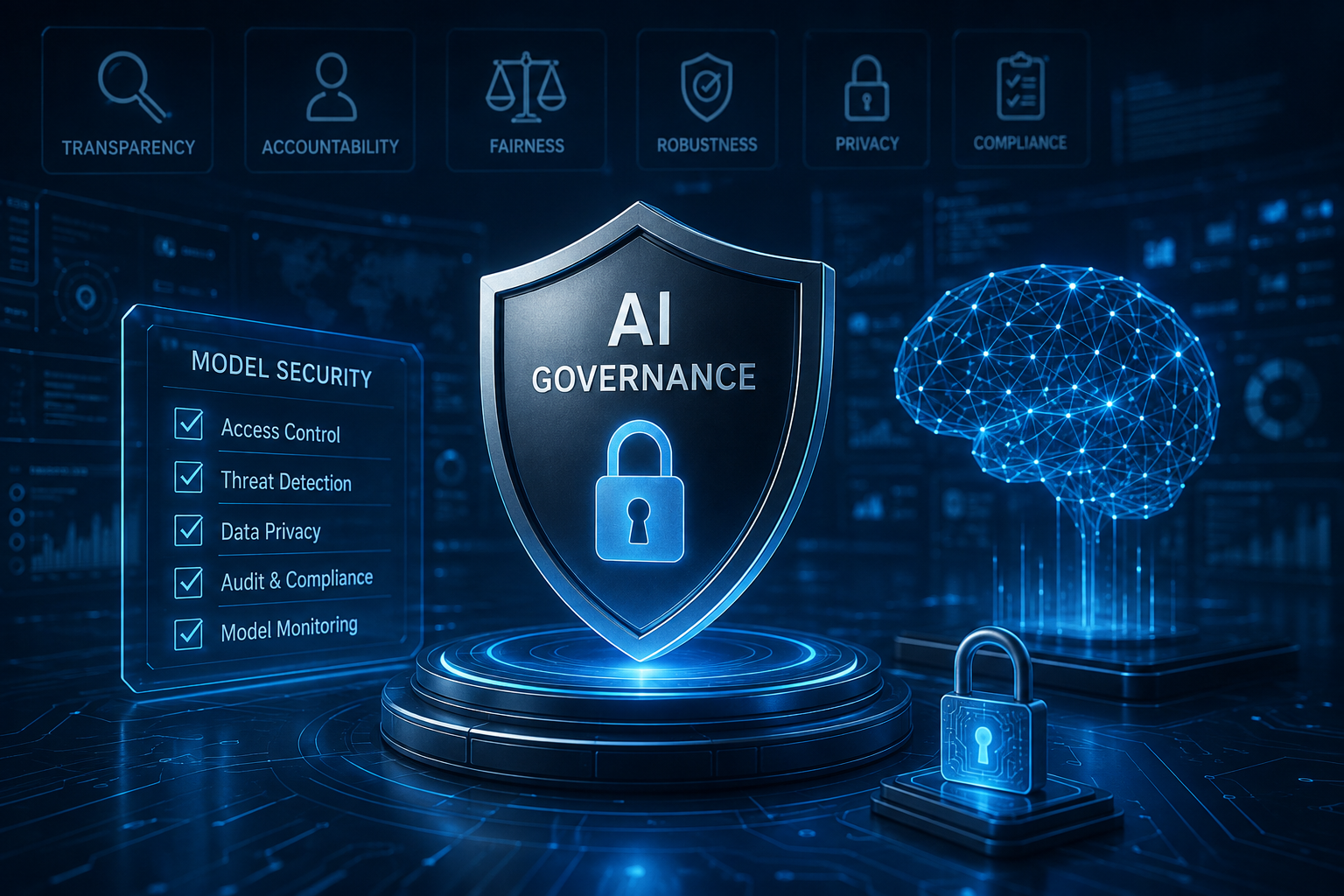
And alongside the architectures, a category of vendors exists to secure the AI itself and prove it to a regulator. The practical implication: when an AI vendor is blocked over "where does our data go," the right next question isn't "can we get an exception?" It's "what deployment architecture and what security tooling make this vendor approvable?" Increasingly, there's an answer — and here are real companies that provide it, scored by Traction AI.
These aren't a workaround for security — they're the toolset that gives security what it needs to say yes.
How a Structured Platform Turns Security Into a Partner
Running this whole loop — find, request security documentation, evaluate against consistent criteria, pilot in a governed scope, and document the decision — in email and spreadsheets is exactly what produces the standoff. The security questions scatter, the documentation goes missing, the evaluation isn't comparable, and there's no defensible record at the end.
Running it in one governed system changes that. Traction manages the full vendor evaluation lifecycle — technology scouting, structured RFI management that front-loads the security and compliance questions, consistent scored evaluation, and a documented decision trail — inside a SOC 2 Type II certified platform. Security documentation is requested at the RFI stage by default, not chased after selection. The evaluation record is the audit artifact that satisfies a compliance review. And because security stakeholders can be part of the evaluation from the start, the process is built to reach an approvable "yes" rather than to discover a "no" at the end.
The goal isn't to help innovation teams route around security. It's to give both sides a process where the AI vendors worth deploying get deployed — with the controls, documentation, and defensibility that let security sign off with confidence.
👉 See how Traction manages structured vendor evaluation · Try Traction AI free · Schedule a Demo
Frequently Asked Questions
Why does security block AI vendors so often?
Security teams block AI-enabled vendors when they can't get clear answers to legitimate risk questions: where data is processed and stored, whether the vendor trains its models on customer data, whether the vendor holds SOC 2 Type II or ISO 27001 certification, who the sub-processors are, and whether AI-driven decisions can be explained and audited. Most of these are answerable — the block usually happens not because the answers are bad, but because the questions were asked too late in the evaluation, after the innovation team had already committed to a vendor that hadn't been vetted on security from the start.
How do you get an AI vendor approved by procurement and security?
Front-load the security requirements. Request SOC 2 status, data-residency and handling policies, the sub-processor list, and explicit model-training terms as part of the initial RFI — not after vendor selection. Bring security and procurement into the evaluation at the criteria-setting stage so they define "approvable" up front rather than reacting to a finished deal. Score every vendor against consistent criteria including security, and document the rationale so the decision is defensible. Then pilot in a contained, low-risk data environment before expanding access. This sequence filters out incompatible vendors early and lets approvable ones clear review quickly.
Can you use AI vendors without sending them sensitive data?
Increasingly, yes. Several deployment architectures address this directly: edge and on-premise AI keep data on your own infrastructure so it never leaves your environment; confidential computing protects data even while it's being processed inside hardware-based trusted execution environments; and BYOK/HYOK (bring or hold your own key) lets you retain control of encryption keys so even a cloud-based vendor can't access your data in the clear. When a vendor is blocked over data concerns, the productive question is which of these architectures makes them approvable — often one does.
What is the difference between security being cautious and security blocking innovation?
Caution is legitimate and necessary — AI vendors raise real risks around data, IP, and compliance. The problem isn't caution; it's a process that surfaces security concerns too late. When capability is evaluated first and security is treated as a final gate, incompatible vendors aren't caught until maximum sunk cost, making every "no" feel like security killing a good idea. When security is a partner from the start of the evaluation, the same caution filters bad-fit vendors early and helps good-fit vendors get approved — the difference is process, not posture.
What technology helps deploy AI safely in the enterprise?
Beyond the deployment architectures (edge, on-premise, confidential computing, customer-managed keys), a category of AI governance and model-security platforms exists specifically to give enterprises the oversight security requires — model-risk management, model scanning and red-teaming, audit trails, shadow-AI discovery, runtime monitoring, and compliance mapping to frameworks like the EU AI Act, NIST AI RMF, and ISO 42001. These platforms are what let a security team approve AI deployment with documented confidence rather than blanket caution.
How does a structured evaluation process help with security approval?
A structured, documented evaluation produces two things security needs: a complete, comparable assessment of every vendor against consistent security and compliance criteria, and a defensible record of the decision and its rationale. That record is itself a compliance artifact — evidence that due diligence was performed. Running the process in one governed, certified platform (rather than email and spreadsheets) ensures the security documentation is requested up front, the evaluation is comparable, and the audit trail exists when compliance asks for it.
Related Reading
- AI Governance & Model Security Companies Worth Evaluating in 2026: The Traction Five
- The EU AI Act Just Changed How Banks Have to Evaluate AI Vendors
- How to Write a Vendor RFI That Gets Responses: A Practical Guide
- How to Evaluate Emerging Technologies: A Practical Guide
- What Is Agentic AI for Innovation Management? A Practical Guide for Enterprise Teams
- How to Decide Which Innovation Projects to Fund, Stop, or Scale
About the Author
Neal Silverman is the co-founder and CEO of Traction Technology. He spent 15 years as a senior executive at IDG — running multiple business units connecting enterprises with emerging technologies through conferences, councils, data services, and professional consulting practices. That firsthand experience watching how enterprises discover, evaluate, and lose track of emerging technology relationships is the origin story of Traction. He works with innovation teams at Armstrong, Bechtel, Ford, GSK, Kyndryl, Merck, and Suntory. Connect on LinkedIn
About Traction Technology
Traction Technology is an AI-powered innovation management software platform trusted by Fortune 500 innovation teams including Armstrong, Bechtel, Ford, GSK, Kyndryl, Merck, and Suntory. Built on Claude (Anthropic) and AWS Bedrock with a RAG architecture, Traction manages the full innovation lifecycle — from technology scouting and open innovation through idea management, RFI management, and pilot management — with AI-generated Trend Reports, AI Company Snapshots, duplication detection, and decision coaching built in.
Traction AI scouts across a database of over 1 million verified companies — retrieving real, current results rather than generating hallucinated names. One annual subscription at $4,000 gives you the full capabilities of an enterprise innovation team — every module, every AI capability, and unlimited View-Only access for every stakeholder at no additional cost. No setup fee. No data migration charges. Featured in the Gartner Market Guide for AI-Enabled Innovation Management Platforms, February 2026. SOC 2 Type II certified.
Try Traction AI Free · View Pricing · Schedule a Demo · tractiontechnology.com







.webp)