
Where Should You Apply AI? Start With Your Employees' Pain Points, Not the Technology
Who this post is for: CIOs, CTOs, CFOs, and transformation leaders under pressure to show returns on AI — who are tired of deploying tools in search of a use case and want a defensible way to decide where AI actually belongs.
Most enterprises are approaching AI backwards, and the numbers show it.
The instinct is to start with the technology. We should be using AI — where can we put it? So teams deploy copilots, stand up automation tools, and run pilots, then go hunting for use cases to justify the investment. It feels like progress. It rarely produces returns. McKinsey's 2026 State of AI survey found that only 37% of organizations report any EBIT impact from AI — flat year over year — even as adoption climbs and budgets grow. The tools are everywhere. The value isn't.
The problem isn't the technology. It's the starting point. Deploying AI and then searching for where it fits is solution-first thinking, and solution-first is how you end up with copilots nobody asked for and pilots that don't move a real number.
There's a better place to start, and it's already sitting inside your organization: your employees' pain points. The manual process that eats three hours a week. The two systems that won't talk to each other. The report rebuilt by hand every month. The friction your people live with every day is the most reliable map of where AI will actually create value — and almost nobody is using it.
Why Solution-First AI Fails
Starting with the technology creates three predictable failures.
You optimize the visible, not the valuable. Solution-first AI gravitates toward the use cases that are easy to see from the executive suite — the demo-friendly copilot, the flashy generative feature. These are rarely where the real friction is. The highest-value automation opportunities are usually buried in unglamorous operational work that leadership never sees, and a technology-first search doesn't surface them.
You can't prove it worked. When you deploy a tool and then look for something for it to do, you have no baseline. There's no documented "before" to measure the "after" against, so the ROI conversation devolves into anecdotes and vibes. This is a direct cause of the 37% problem — organizations can't demonstrate impact because they never established what they were trying to improve.
You create adoption resistance. AI dropped onto employees who didn't ask for it — to solve a problem they didn't raise — meets exactly the resistance you'd expect. The tool that would have been welcomed if it solved a real, felt frustration instead becomes one more thing imposed from above.
The common thread: solution-first AI is a guess. Sometimes an educated guess, but a guess. And at the scale enterprises are now spending on AI, guessing is expensive.
Pain Points Flip It to Problem-First
Starting with employee pain points inverts every one of those failures, because a pain point is fundamentally different from a use case someone dreamed up in a planning session. It's real, it's owned, and it's already validated by the person who lives with it.
A pain point is a pre-validated AI use case. "This reconciliation takes three hours every week" is already a candidate for automation — sized, specific, and real — before anyone says the word AI. You're not searching for somewhere to apply the technology. The friction tells you exactly where it belongs, and it comes pre-qualified: someone with the job already confirmed the problem is worth solving.
Aggregated pain points reveal the highest-value targets. This is where it becomes a strategy rather than a list. When the same friction is reported by forty people across three business units — recognized and clustered even though each described it in different words — you haven't just found a place to apply AI. You've found the one with the biggest return, quantified by how many people it affects and how much time it costs them. The map of clustered pain points is your AI-opportunity prioritization, ranked by impact, drawn from evidence rather than opinion.
The ROI case is built in. Because you started from measurable friction, the baseline already exists. You know what the process cost before; you can measure what it costs after. Every problem-first AI initiative carries its own proof of value, which is exactly what solution-first initiatives can never produce.
Adoption comes for free. When AI shows up to solve a problem employees themselves raised, it isn't imposed — it's requested. The resistance that plagues top-down AI rollouts largely evaporates when the people using the tool are the ones who identified the need.
This Is How the ROI Winners Actually Operate
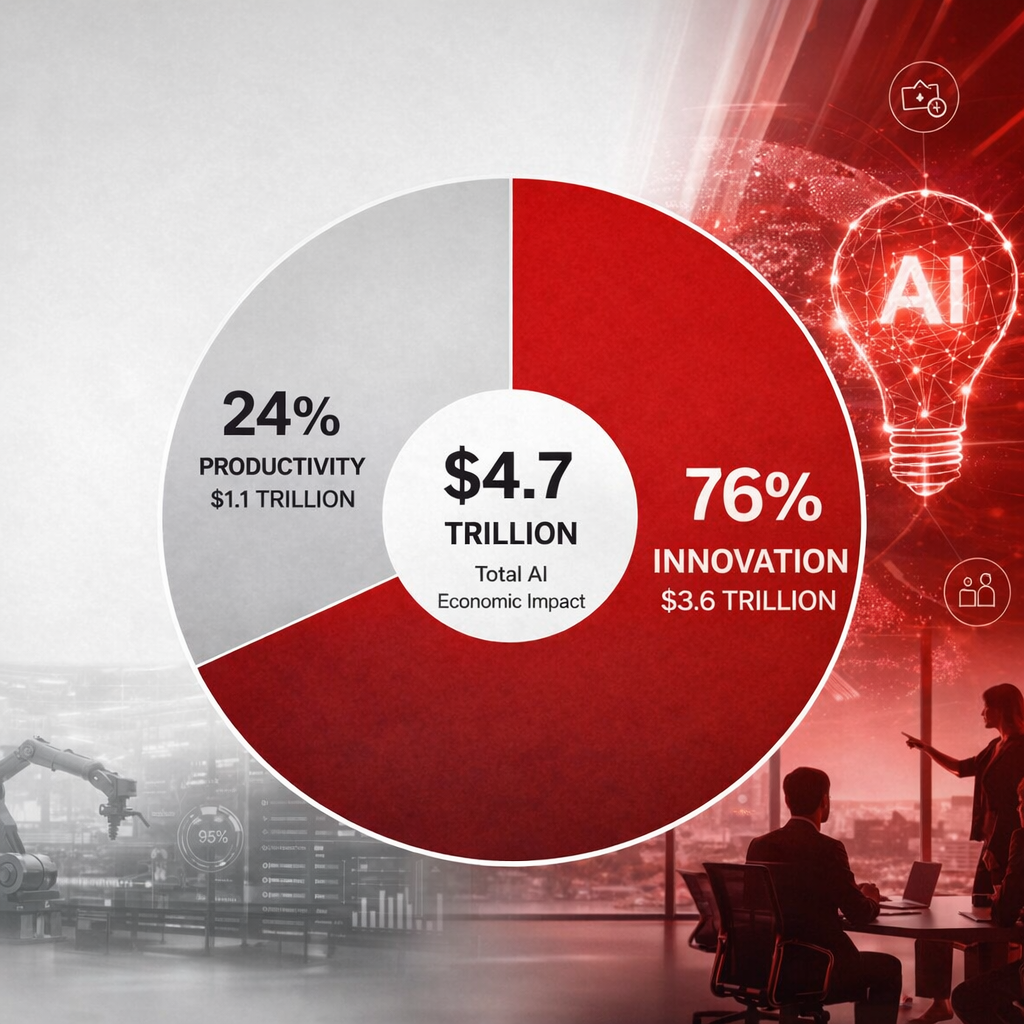
This isn't just intuition. Bain's 2026 analysis put $4.7 trillion of global corporate profits at stake from AI over the next decade — and found that 76% of that value comes from innovation and competitive positioning, not from generic productivity gains. Critically, Bain's finding was that the winners are the organizations that systematically find where AI creates value, rather than the ones that spend the most or deploy the most tools.
Capturing pain points is how you systematically find it. It converts "where should we apply AI?" from a recurring strategy-offsite debate into a continuously updated, evidence-backed roadmap — sourced directly from the people who do the work and see the friction first. Instead of a handful of executives guessing at automation targets, the whole organization surfaces them, and AI clustering ranks them by impact.
That's the difference between the enterprises showing EBIT impact and the 63% that aren't. The winners aren't applying AI in more places. They're applying it in the right places — and the right places are where the friction already is.
From Pain Point to Deployed AI
A pain point only creates value if it moves through to a solution. The workflow is what turns the signal into results:
1. Capture the friction. Ask employees a simple question — what's slowing you down, and where do you think technology could help? — answerable in a sentence, with no login required, from anyone. Not a twenty-field form. Just the problem, from the person who has it.
2. Cluster to find the pattern. AI recognizes when the same underlying problem is reported in different words across different teams, and groups it. Scattered complaints become a ranked map of organizational friction, each cluster sized by how many people it affects.
3. Prioritize by impact. The clusters that affect the most people and cost the most time rise to the top. This is your AI roadmap — not a wishlist, a prioritized queue of validated, high-return opportunities.
4. Scout for the solution. For each high-priority pain point, find the technology that solves it. With Traction AI, that means scouting across a database of over 1 million verified companies for AI solutions matched to the specific problem — returning a scored shortlist of vendors to evaluate, not a guess. The internal problem drives the external solution search.
5. Pilot against the baseline. The most promising solution moves into a structured pilot with success criteria measured against the friction the pain point already quantified. Because you started with a real problem, you have a built-in test: did the friction go away?
6. Prove it and scale. A pilot that clears its threshold has documented ROI by construction — the before-and-after was there from the start. That's the evidence that justifies scaling, and the evidence the 37% can't produce.
Getting Started
If you're under pressure to show returns on AI and unsure where to invest next, resist the pull to start with the technology. Start with the friction your people already feel.
Ask where it hurts — a simple, frictionless question open to everyone, not just the teams you'd expect.
Let AI cluster the answers so convergent friction surfaces as a ranked, sized opportunity rather than a pile of tickets.
Treat the pain-point map as your AI roadmap — prioritized by impact, built from evidence.
Scout, pilot, and prove against the baseline each pain point already established.
The enterprises capturing AI's value aren't the ones deploying it in the most places. They're the ones deploying it in the right places — and the right places are exactly where your people are already telling you it hurts, if you build the system to listen.
👉 See how Traction captures pain points and scouts for AI solutions · Try Traction AI free · Schedule a Demo
Frequently Asked Questions
Where should a company start when deciding where to apply AI?
Start with employee pain points — the operational friction people experience in their jobs — rather than with the technology. A pain point is a pre-validated, already-sized use case: "this manual process takes three hours a week" identifies exactly where automation would create value, confirmed by the person who lives with it. Starting with the technology and hunting for use cases is solution-first thinking, which is a leading reason most enterprises struggle to show returns on AI. Starting with the problem is what reliably produces ROI.
Why do so many enterprise AI investments fail to show ROI?
McKinsey's 2026 research found only 37% of organizations report any EBIT impact from AI despite rising adoption. The most common cause is solution-first deployment: organizations buy tools and then search for something for them to do, which means they optimize visible rather than valuable use cases, have no baseline to prove impact, and create adoption resistance by imposing tools employees didn't ask for. Problem-first AI — starting from validated pain points — avoids all three failures because the use case is real, sized, and owned before any technology is chosen.
How do employee pain points become an AI roadmap?
When pain points are captured broadly and AI clusters the ones describing the same underlying problem, the result is a ranked map of organizational friction — each cluster sized by how many people it affects and how much time it costs. The clusters with the highest impact become the top of the AI roadmap: a prioritized queue of validated, high-return automation opportunities sourced from evidence rather than executive guesswork. This turns "where should we apply AI?" into a continuously updated, data-backed answer.
What's the difference between solution-first and problem-first AI?
Solution-first AI starts with the technology — deploying tools and searching for use cases to justify them. It tends to optimize visible rather than high-value work, lacks a baseline to prove impact, and meets adoption resistance. Problem-first AI starts with a validated problem — an employee pain point that's real, sized, and owned — and then finds the technology to solve it. Problem-first carries its own ROI proof because the baseline exists from the start, and adoption comes more easily because the solution addresses a need employees themselves raised.
How does capturing pain points connect to technology scouting?
A pain point is a validated internal problem, and once it's captured, clustered, and prioritized, it becomes the input for a solution search. The innovation or IT team scouts for technologies that address that specific problem — with an AI-powered scouting platform, that means searching a verified database of companies for solutions matched to the pain point and returning a scored shortlist of vendors to evaluate. The internal problem drives the external solution search, connecting validated demand to real supply.
Does this approach work for large, complex organizations?
It works especially well at scale, because scale is where the clustering matters most. In a large organization, the same friction is often experienced independently by dozens or hundreds of people across different functions who never compare notes. AI clustering surfaces that convergence as a single high-priority signal with a built-in business case, revealing enterprise-wide automation opportunities that no individual team would have had the visibility to identify on its own.
Related Reading
- Bain Says 76% of AI's $4.7 Trillion Is Innovation, Not Productivity
- McKinsey 2026 AI Survey: Closing the AI ROI Gap With Pilot Governance
- Why Innovation Programs Lose Participation Over Time
- How AI Is Transforming Technology Scouting
- What Is Agentic AI for Innovation Management? A Practical Guide for Enterprise Teams
- How to Decide Which Innovation Projects to Fund, Stop, or Scale
About the Author
Neal Silverman is the co-founder and CEO of Traction Technology. He spent 15 years as a senior executive at IDG — running multiple business units connecting enterprises with emerging technologies through conferences, councils, data services, and professional consulting practices. That firsthand experience watching how enterprises discover, evaluate, and lose track of emerging technology relationships is the origin story of Traction. He works with innovation teams at Armstrong, Bechtel, Ford, GSK, Kyndryl, Merck, and Suntory. Connect on LinkedIn
About Traction Technology
Traction Technology is an AI-powered innovation management software platform trusted by Fortune 500 innovation teams including Armstrong, Bechtel, Ford, GSK, Kyndryl, Merck, and Suntory. Built on Claude (Anthropic) and AWS Bedrock with a RAG architecture, Traction manages the full innovation lifecycle — from technology scouting and open innovation through idea management, RFI management, and pilot management — with AI-generated Trend Reports, AI Company Snapshots, duplication detection, and decision coaching built in.
Traction AI scouts across a database of over 1 million verified companies — retrieving real, current results rather than generating hallucinated names. One annual subscription at $4,000 gives you the full capabilities of an enterprise innovation team — every module, every AI capability, and unlimited View-Only access for every stakeholder at no additional cost. No setup fee. No data migration charges. Featured in the Gartner Market Guide for AI-Enabled Innovation Management Platforms, February 2026. SOC 2 Type II certified.
Try Traction AI Free · View Pricing · Schedule a Demo · tractiontechnology.com








.webp)