
How AI Is Transforming Technology Scouting: A Practical Guide for Enterprise Teams
Updated July 2026
Technology scouting has always been one of the most important and most under-resourced functions in enterprise innovation. The mandate is straightforward: find the emerging technologies and vendors that matter to your organization before your competitors do, evaluate them rigorously, and connect the best ones to the business problems they can solve.
For most of the past two decades, that mandate was executed manually. Conferences. Analyst subscriptions. Industry networks. Patent databases. Cold outreach from startup sales teams. Research reports that were out of date before they were finished.
The result was a function perpetually behind — scanning a global technology landscape too large for any team to cover manually, with tools never built for the job.
AI has changed this. Not incrementally — structurally. The way enterprise teams scout technology in 2026 looks fundamentally different from how it looked three years ago, and the gap between organizations that have made the transition and those that have not is widening fast.
What Is Technology Scouting?
Technology scouting is the systematic process of identifying, evaluating, and tracking emerging technologies — typically from outside the organization — to assess their potential impact on the business and connect them to internal innovation priorities.
It is distinct from vendor procurement, which begins when a business need is already defined and a solution category is already known. Technology scouting is proactive — it surfaces technologies and vendors before a specific use case has been articulated, building the organizational awareness that makes faster, better procurement decisions possible downstream.
A mature technology scouting function covers:
- Market intelligence — continuous monitoring of emerging technology categories, startup funding activity, patent filings, and competitive moves
- Opportunity identification — connecting external technology signals to internal business priorities and strategic goals
- Vendor assessment — initial evaluation of specific companies against defined criteria before formal procurement begins
- Ecosystem mapping — maintaining a structured view of the vendor landscape in priority technology categories over time
- Stakeholder distribution — sharing scouting intelligence across business units, R&D teams, and leadership in a format that drives decisions rather than generating reports nobody reads
When scouting is connected to idea management and pilot management in a single platform, it becomes the front end of a continuous innovation lifecycle rather than a standalone research function.
Why Manual Technology Scouting No Longer Works at Enterprise Scale
The technology landscape enterprise innovation teams are expected to monitor has grown beyond what any manual process can cover.
There are well over a million enterprise-relevant technology companies active globally across AI, automation, climate tech, digital health, advanced manufacturing, fintech, cybersecurity, and dozens of other categories. New companies are founded every day. Funding rounds happen weekly. Acquisitions reshape competitive landscapes overnight.
A team of three technology scouts — a large scouting team by enterprise standards — cannot manually monitor this landscape with any consistency. The result is a scouting function that covers the categories it already knows about, misses the ones it does not, and perpetually lags the market it is supposed to be ahead of.
The specific failure modes of manual scouting are well documented:
Coverage gaps. Manual research is bounded by the researcher's existing knowledge. Technologies emerging in adjacent categories — where the biggest surprises often come from — get missed.
Speed limitations. A manual technology landscape report takes weeks to produce. By the time it reaches a business unit sponsor, key developments have already moved.
Inconsistent evaluation. Different scouts assess vendors differently. The same company evaluated by two different people produces two different assessments. Portfolio-level comparison becomes impossible.
No institutional memory. A vendor evaluated two years ago by a team member who has since left exists nowhere in the organization's accessible knowledge base. The evaluation starts again from zero.
Inbound noise management. Large enterprises receive hundreds of inbound startup pitches every month. Without a structured intake process, most get ignored — including the ones worth evaluating.
How AI Is Changing Technology Scouting
AI addresses each of these failure modes directly — not by replacing human judgment but by extending the reach, speed, and consistency of the scouting function beyond what any manual process can achieve.
Requirement-driven vendor discovery
The most significant change AI has brought to technology scouting is the shift from search-based to requirement-driven discovery. Instead of constructing boolean queries across multiple databases and then manually filtering results, innovation teams describe what they are looking for in plain language and receive a structured shortlist in minutes.
Give Traction AI a requirement — find vendors working on AI-assisted quality control for pharmaceutical manufacturing — and it reasons across a database of over 1 million verified companies, surfacing relevant companies with profiles, funding data, customer references, and relevance scoring. The same output a skilled analyst would produce in a week, delivered in minutes. No boolean searches. No manual filtering. No analyst hours.
Critically, Traction AI retrieves from verified data rather than generating from training patterns — so every company on the shortlist actually exists and currently operates. No hallucinated names.
This is not a marginal efficiency improvement. It is a structural change in what a small innovation team can cover. A team of two using AI-powered scouting can monitor technology categories that previously required a team of ten.
AI-generated trend reports
Beyond vendor discovery, AI enables continuous trend monitoring — surfacing signals from patent filings, academic research, startup funding activity, news, and market data to identify emerging technology categories before they become obvious.
Traction AI generates structured trend reports on demand — covering market trajectory, key players, funding activity, enterprise adoption patterns, and strategic implications — giving innovation teams the intelligence layer previously available only through expensive analyst subscriptions or dedicated research staff.
According to Gartner's 2026 research, organizations that proactively use AI to spot emerging trends are 2x more likely to have high innovation performance. The compounding effect of early adoption is even more striking — first movers on emerging technology adoption are 4.2x more likely to be in the high enterprise-wide performance cohort than non-adopters.
Structured evaluation at scale
AI enables consistent vendor evaluation across large volumes of companies — applying the same assessment framework to every vendor in a category, generating comparable profiles that make portfolio-level analysis possible.
Where manual evaluation produces assessments that vary by analyst, AI-assisted evaluation produces structured output that is consistent, searchable, and comparable across hundreds of vendors. Traction AI generates a Company Snapshot and a Traction Score for each company — an evaluation across scalability, security and compliance, market validation, financial stability, product maturity, and operational risk. This makes the downstream decisions — which vendors to pursue, which to monitor, which to deprioritize — faster and more defensible.
Institutional memory that compounds
Every vendor evaluated, every technology assessed, every scouting engagement completed — when captured in a structured platform with AI-assisted synthesis, this history becomes a searchable organizational asset rather than information that walks out the door when team members leave.
When a business unit asks about AI-assisted predictive maintenance for the third time in five years, an AI-powered scouting platform surfaces what was found in the previous two evaluations — the vendors assessed, the criteria applied, the decisions made, and why. The organization learns rather than repeating.
Duplicate detection and deduplication
One of the most underrated AI capabilities in technology scouting is the ability to detect when an evaluation is already in progress or has already been completed. At large enterprises with multiple innovation teams across business units, the same vendor frequently gets evaluated multiple times by different teams without any awareness of the duplication.
AI-powered deduplication surfaces these overlaps before resources are wasted — and creates the opportunity to combine evaluation efforts across teams rather than running them in parallel.
How AI Technology Scouting Connects to the Full Innovation Lifecycle
Technology scouting does not exist in isolation. Its value is realized when scouting intelligence connects directly to the evaluation, pilot, and scale stages that follow it.
The strongest innovation programs connect these stages in a single platform — so a technology identified through AI-powered scouting can move directly into a structured evaluation workflow, and a vendor that clears evaluation can move directly into a governed pilot program, without manual handoffs that lose context and create delays.
Scouting → Idea validation: When an employee submits an idea, AI-powered scouting can immediately surface external vendors and technologies relevant to that idea — connecting internal creativity to external market intelligence at the point of submission rather than weeks later.
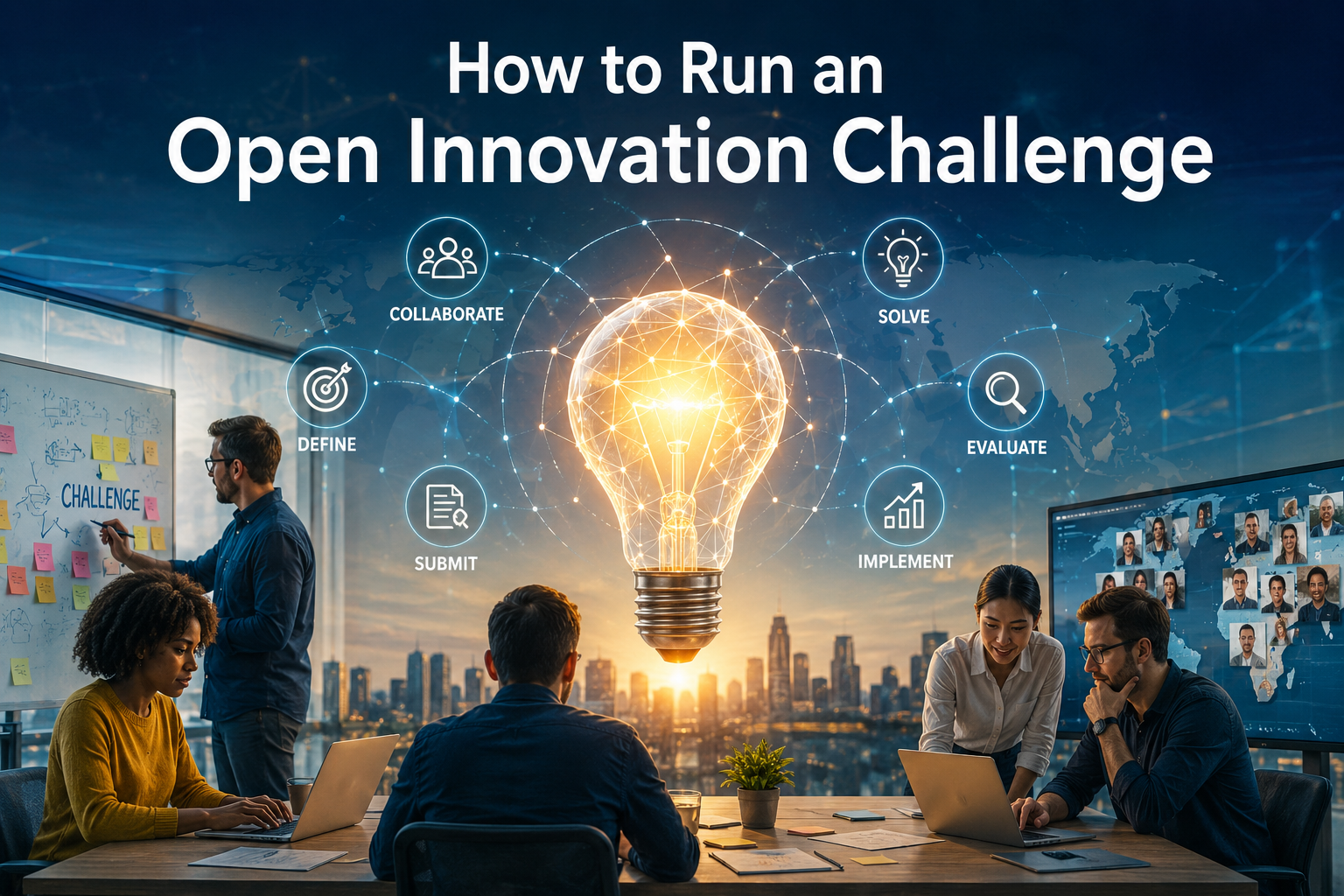
Scouting → Open innovation: Technology scouting identifies the categories worth targeting with open innovation challenges before the challenge is designed. When scouting and open innovation are connected in a single platform, the challenge brief is informed by what the scouting function has already found in the category.
Scouting → Vendor evaluation and RFI: The shortlist produced by AI-powered scouting becomes the starting point for structured vendor evaluation — with company profiles, funding data, and relevance scoring already populated. From there, RFIs can be issued directly from the platform to shortlisted vendors, with responses collected in a comparable format — the full workflow from discovery through RFI in a single connected system.
Scouting → Pilot management: Vendors that clear evaluation move directly into structured pilot programs with defined KPIs, milestone governance, and outcome documentation. The institutional memory accumulated during scouting and evaluation informs the pilot design.
This connected lifecycle is what separates innovation programs that produce outcomes from those that produce activity.
👉 Try Traction AI free — technology scouting and trend reports, no demo call required
What to Look for in an AI-Powered Technology Scouting Platform
Not every platform that claims AI-powered scouting delivers it in a form useful for enterprise innovation teams. The specific capabilities that matter:
Requirement-driven natural language search. The platform should allow scouts to describe what they are looking for in plain language — not require them to construct boolean queries or navigate complex filter interfaces. The output should be a structured shortlist, not a raw data export.
Verified data, not hallucinated names. The platform should retrieve from a verified company database rather than generating plausible-sounding company names from training data. A scouting tool that returns companies that do not exist, have pivoted, or have shut down is worse than no tool — it produces confident, unverifiable output.
No fixed database ceiling. Platforms that limit scouting to a small curated internal database miss the long tail of emerging companies where the most interesting opportunities often live. AI-powered scouting should reason across a large verified database and extend beyond it through additional integrations.
Structured company profiles with external data enrichment. Vendor profiles should be automatically populated with funding data, customer references, team information, and market context — not require manual entry by the scout.
Integration with evaluation, RFI, and pilot management. Scouting intelligence should flow directly into structured evaluation workflows, RFI management, and pilot management without manual re-entry. The platform should be the system of record for the full lifecycle.
Institutional memory by design. Every scouting engagement, every vendor assessment, every evaluation decision should be captured as structured, searchable data — so future scouting builds on what was already found rather than starting from zero.
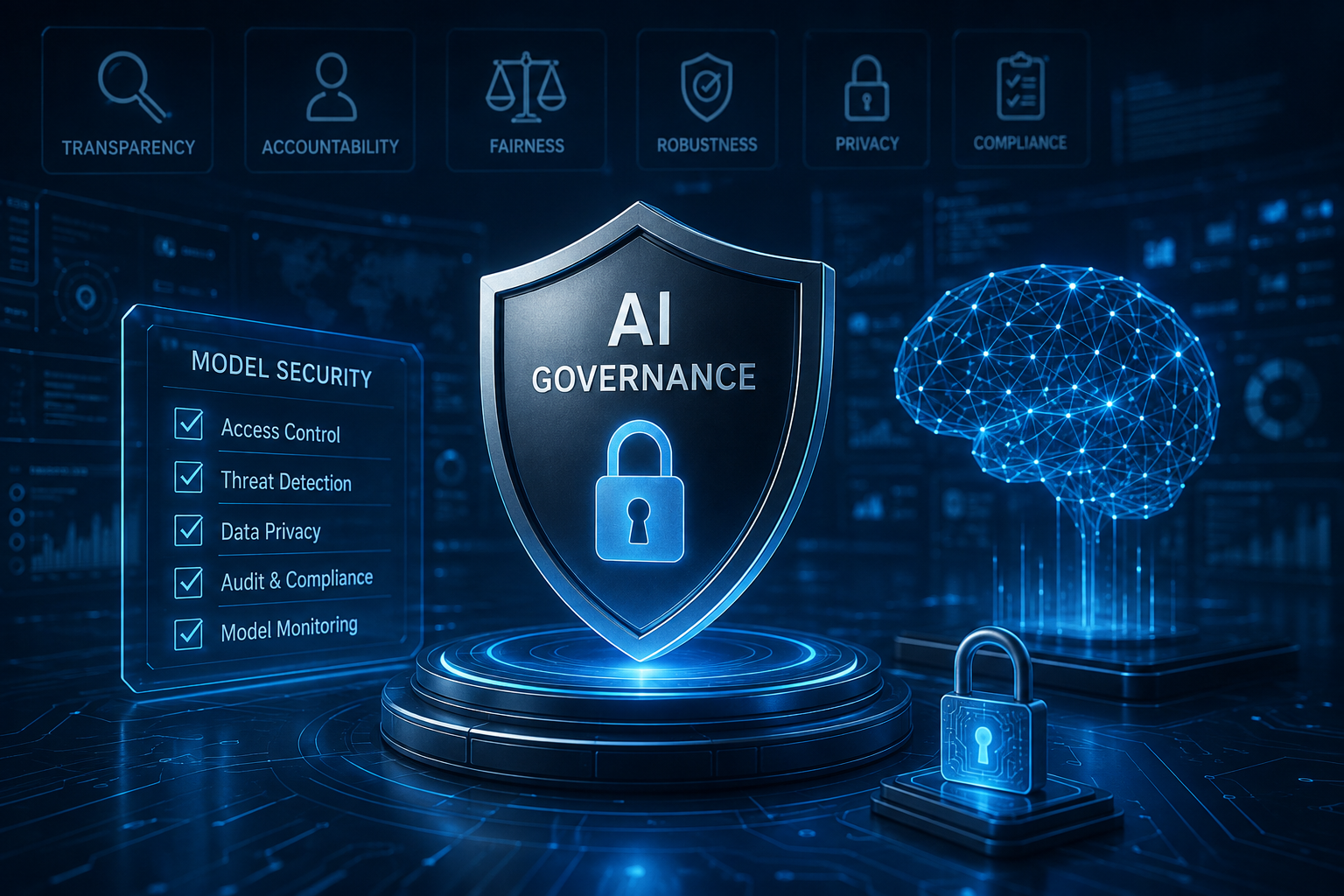
Enterprise security architecture. Technology scouting involves sensitive competitive intelligence and strategic planning data. The platform needs SOC 2 Type II certification, role-based access control, and data governance controls that enterprise IT and procurement teams require.
Traction AI: Technology Scouting Built for Enterprise Innovation Teams
Traction AI is the technology scouting engine built into Traction's end-to-end innovation management platform. It enables vendor discovery through requirement-driven AI scouting — powered by Claude (Anthropic) on AWS Bedrock with a RAG architecture that isolates customer data and ensures enterprise-grade security.
Enterprise innovation teams use Traction AI to:
- Scout any technology category through natural language — describe the requirement, and Traction AI reasons across a database of over 1 million verified companies to return a scored shortlist. No boolean searches, no manual filtering, no analyst hours.
- Generate AI-powered Trend Reports that surface emerging technology signals and market intelligence on demand
- Access AI Company Snapshots with structured vendor profiles, funding data, and a Traction Score for each company
- Connect scouting intelligence directly to structured evaluation, RFI management, open innovation challenges, and pilot management in a single platform
- Build institutional memory that compounds with every engagement — so the organization gets smarter with every scouting cycle
Traction AI scouts across a database of over 1 million verified companies — retrieving real, current results rather than generating hallucinated names — with full Crunchbase integration for one-click access to millions more.
Featured in the Gartner Market Guide for AI-Enabled Innovation Management Platforms, February 2026. SOC 2 Type II certified. Trusted by enterprise innovation teams including Armstrong, Bechtel, Ford, GSK, Kyndryl, Merck, and Suntory.
"By accelerating technology discovery and evaluation, Traction Technology delivers a faster time-to-innovation and supports revenue-generating digital transformation initiatives." — Global F100 Manufacturing CIO
Frequently Asked Questions
What is technology scouting?
Technology scouting is the systematic process of identifying, evaluating, and tracking emerging technologies — typically from outside the organization — to assess their potential impact and connect them to internal innovation priorities. It is a proactive function that builds organizational awareness of the technology landscape before specific use cases are defined, enabling faster and better vendor decisions when business needs arise.
How is AI changing technology scouting?
AI is changing technology scouting by enabling requirement-driven vendor discovery, automated trend monitoring, consistent evaluation at scale, and institutional memory that compounds over time. Where manual scouting is bounded by researcher time and existing knowledge, AI-powered scouting reasons across the full global technology landscape — surfacing relevant vendors and market signals faster and more consistently than any manual process, and retrieving from verified data rather than generating unverifiable names.
What is the difference between technology scouting and vendor procurement?
Vendor procurement begins when a business need is already defined and a solution category is known. Technology scouting is proactive — it identifies technologies and vendors before a specific use case has been articulated. The strongest innovation programs connect both: scouting builds the organizational awareness that makes procurement faster and more informed when a need arises.
How does AI technology scouting work in practice?
In practice, AI technology scouting is triggered by a requirement or problem statement — a scout describes what they are looking for, and the AI reasons across a verified company database to return a structured shortlist of relevant vendors with profiles, funding data, and relevance scoring. The platform also monitors the technology landscape for signals — funding activity, patent filings, news, market developments — and generates trend reports that give innovation teams intelligence they would otherwise need analyst subscriptions or dedicated research staff to produce.
What should enterprise teams look for in a technology scouting platform?
The most important capabilities are: requirement-driven natural language search that retrieves from verified data rather than generating hallucinated names, no fixed database ceiling, structured company profiles with automatic external data enrichment, integration with evaluation and RFI and pilot management workflows, institutional memory that captures every scouting engagement as searchable organizational knowledge, and enterprise security architecture including SOC 2 Type II certification.
How does technology scouting connect to pilot management?
In connected innovation programs, vendors identified through technology scouting move directly into structured evaluation and RFI workflows, and vendors that clear evaluation move directly into governed pilot programs with defined KPIs, milestone tracking, and outcome documentation. When scouting and pilot management are connected in a single platform, the context accumulated during scouting informs the pilot design — and the pilot outcomes feed back into the scouting function's institutional memory.
How does Gartner view AI-powered technology scouting?
According to Gartner's 2026 research, organizations that proactively use AI to spot emerging trends are 2x more likely to have high innovation performance. First movers on emerging technology adoption are 4.2x more likely to be in the high enterprise-wide performance cohort than non-adopters. Gartner's strategic planning assumption states that through 2029, 90% of successful innovations will come from enterprises that execute AI-led innovation processes.
Is Traction Technology SOC 2 certified?
Yes. Traction Technology is SOC 2 Type II certified, GDPR compliant, CCPA compliant, and built on AWS with enterprise-grade security architecture. View the full security architecture →
Related Reading
- What Is Agentic AI for Innovation Management? A Practical Guide for Enterprise Teams
- What Is Innovation Management? A Practical Definition for Enterprise Teams
- How to Write a Vendor RFI That Gets Responses: A Practical Guide
- Why Pilot Management Software Is the Missing Link in Innovation Execution
- Manufacturing AI Startups Worth Evaluating in 2026: The Traction Five
- What Is Open Innovation? A Practical Guide for Enterprise Teams
- Traction Technology Featured in Gartner's 2026 Report on AI-Enabled Innovation Management Platforms
About Traction Technology
Traction Technology is an AI-powered innovation management software platform trusted by Fortune 500 innovation teams including Armstrong, Bechtel, Ford, GSK, Kyndryl, Merck, and Suntory. Built on Claude (Anthropic) and AWS Bedrock with a RAG architecture, Traction manages the full innovation lifecycle — from technology scouting and open innovation through idea management, RFI management, and pilot management — with AI-generated Trend Reports, AI Company Snapshots, duplication detection, and decision coaching built in.
Traction AI scouts across a database of over 1 million verified companies — retrieving real, current results rather than generating hallucinated names. One annual subscription at $4,000 gives you the full capabilities of an enterprise innovation team — every module, every AI capability, and unlimited View-Only access for every stakeholder at no additional cost. No setup fee. No data migration charges. Featured in the Gartner Market Guide for AI-Enabled Innovation Management Platforms, February 2026. SOC 2 Type II certified.
Try Traction AI Free · View Pricing · Schedule a Demo · tractiontechnology.com




.webp)