
Innovation Management for Consumer Goods and CPG: How Enterprise Teams Scout, Pilot, and Scale New Technology and Supply Chain Innovation
The consumer goods industry has always moved fast. What has changed in 2026 is that fast is no longer fast enough.
Consumer preferences that used to shift over two to three years now shift in two to three months. Sustainability mandates that were aspirational three years ago are now regulatory requirements in key markets. Private label competition has compressed margins in categories that were insulated from it a decade ago. And the technology landscape — AI-powered formulation, sustainable packaging innovation, supply chain intelligence, personalization platforms — is producing new vendors and new capabilities faster than annual planning cycles can track.
The CPG companies that are winning are not the ones with the largest R&D budgets. They are the ones with the most systematic approach to identifying what is emerging, evaluating it rigorously, piloting it with discipline, and scaling what works before competitors have completed their first evaluation.
That systematic approach is an innovation management program. And the infrastructure that makes it repeatable — rather than dependent on the relationships and memory of whoever happens to be running it this year — is a purpose-built platform.
This post covers what innovation management looks like for enterprise CPG teams, the specific challenges the sector creates that other industries do not face in the same way, and how leading companies like PepsiCo, Suntory, and Colgate-Palmolive are building structured programs that connect technology scouting to pilot execution to measurable business outcomes.
The Definition
Innovation management for consumer goods and CPG is the structured practice of identifying, evaluating, and advancing emerging technologies, ingredients, packaging solutions, and operational capabilities relevant to the organization's product development, sustainability, and supply chain priorities — through a governed program that connects technology scouting to open innovation, vendor evaluation, pilot management, and portfolio reporting in a single system that builds organizational intelligence over time.
The phrase organizational intelligence over time is the one that matters most for CPG specifically. The technology decisions a CPG company makes about ingredient sourcing, packaging materials, formulation platforms, and supply chain infrastructure have compounding consequences. An evaluation conducted three years ago — even one that resulted in a decline — contains information that should inform the current evaluation in the same category. A platform that captures and surfaces that history is not just operationally convenient. It is a competitive asset.
Why Innovation Management Is Distinctly Challenging in CPG
The CPG sector faces a specific set of innovation management challenges that are more acute than in most other enterprise verticals. Understanding them is what makes it possible to build a program that actually addresses them rather than one that borrows its structure from a different industry context.
Challenge 1: Multiple Innovation Mandates Run Simultaneously — With Different Timelines
A large CPG company is not pursuing one innovation agenda. It is simultaneously managing:
Product innovation — evaluating new ingredients, functional benefits, flavor profiles, and formulation approaches on a timeline driven by consumer trend cycles and competitive product launches. The window between a trend emerging in foodservice data and a competitor launching a product in retail can be as short as eighteen months.
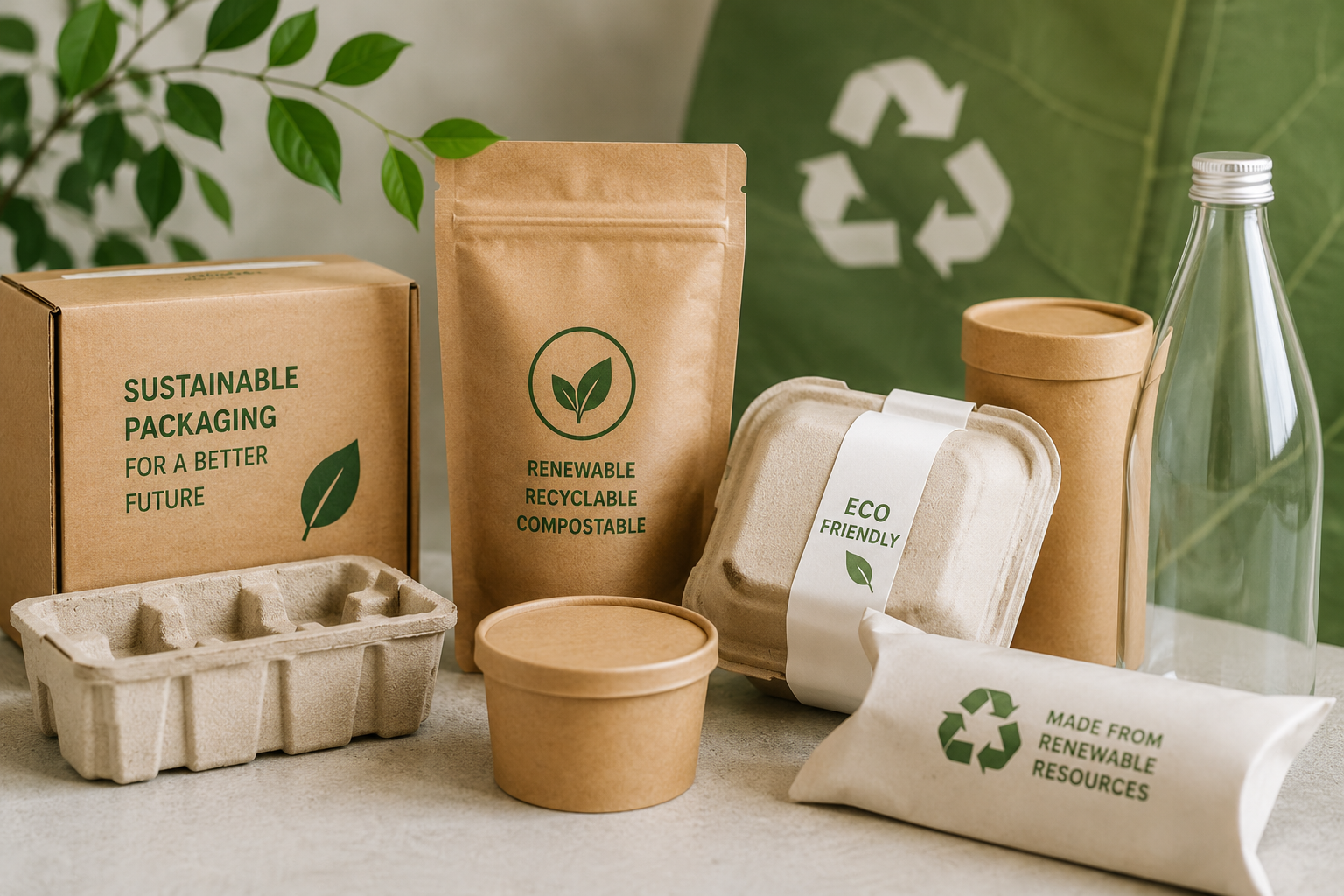
Sustainability and packaging innovation — assessing sustainable packaging materials, clean-label ingredient alternatives, carbon-reduction technologies, and circular economy solutions on a timeline driven by regulatory commitments, retailer requirements, and consumer expectations. These mandates are not optional and their deadlines are external rather than internal.
Supply chain and manufacturing innovation — evaluating automation, AI-powered quality control, predictive maintenance, and supply chain visibility platforms on a capital planning timeline that operates independently from product development cycles.
Digital and direct-to-consumer innovation — tracking personalization platforms, DTC infrastructure, loyalty technology, and retail media capabilities that are evolving faster than most CPG IT departments can evaluate them.
Each of these mandates has different stakeholders, different success criteria, different evaluation timelines, and different vendor landscapes. Managing all of them simultaneously — with a unified portfolio view, consistent evaluation standards, and institutional memory that connects decisions across mandates — requires a platform designed for program complexity rather than a single use case.
Challenge 2: Consumer Trend Cycles Are Shorter Than Evaluation Cycles
The traditional enterprise vendor evaluation process — twelve to eighteen months from initial scouting through pilot decision — is structurally misaligned with the speed at which consumer preferences move in CPG.
A health and wellness trend that is emerging in foodservice data today will be mainstream retail in eighteen months. A CPG company that starts its evaluation when the trend becomes visible in retail data is already eighteen months behind the companies that were monitoring it at the foodservice stage.
The only way to close this gap is continuous scouting — maintaining a live, current view of emerging vendors and technologies in priority categories rather than running point-in-time evaluations when a trend has already become obvious. AI-powered scouting against a verified database of real companies makes continuous monitoring economically viable for a lean innovation team. Manual research at the frequency required to maintain a current view of rapidly evolving CPG technology categories is not.
Challenge 3: Ingredient and Material Innovation Has Regulatory and Safety Dimensions
Technology evaluation in most enterprise contexts involves assessing whether a new platform integrates with existing systems and performs as specified. Technology evaluation in CPG — particularly for ingredient, formulation, and packaging innovation — involves additional dimensions that most evaluation frameworks were not designed to assess.
Regulatory compliance in the target markets. Safety and toxicology data for novel ingredients. Allergen and labeling implications of formulation changes. Supplier certification requirements for clean-label and sustainability claims. These dimensions do not appear in a standard five-criterion vendor evaluation framework and cannot be assessed by the innovation team alone.
An innovation management program for CPG has to incorporate regulatory and safety qualification as explicit evaluation criteria — applied early enough to avoid investing significant evaluation resources in vendors whose solutions cannot be deployed in the target markets regardless of their technical performance.
Challenge 4: Retailer and Customer Requirements Create External Evaluation Drivers
CPG innovation decisions are not made in isolation from the retailer relationships that determine whether innovations reach consumers. A packaging innovation that does not meet Walmart's sustainability requirements, or a product concept that does not align with a key retailer's category strategy, faces a commercial barrier that the technology evaluation process cannot surface without explicit consideration of the retail landscape.
The most effective CPG innovation programs treat retailer and customer requirements as inputs to the scouting priority definition process — not as late-stage considerations that emerge after vendor selection. The innovation mandate brief for a packaging sustainability project needs to specify which retailer requirements apply, what the relevant regulatory timelines are, and what the commercial pathway looks like — before the first vendor is invited to evaluate.
Challenge 5: Institutional Memory Resets With Every Team Change
CPG innovation functions have relatively high turnover compared to other enterprise functions — because the skills that make a great innovation leader are portable and in demand across the industry. The senior scouting manager who built the organization's understanding of the sustainable packaging vendor landscape over three years takes that knowledge with them when they join a competitor.
Without a platform that captures evaluation rationale, vendor assessment history, pilot outcomes, and category intelligence as structured data the organization owns, the institutional memory of the innovation program walks out with every team change. The next evaluation in the same category starts from scratch — repeating research that was already done, re-evaluating vendors that were already assessed, and missing the institutional intelligence that would have made the evaluation faster and more defensible.
The Innovation Workflow for CPG Enterprise Teams
A structured innovation management program for CPG covers five connected stages that operate continuously across all active innovation mandates simultaneously.
Stage 1: Define Scouting Priorities Aligned to Consumer and Commercial Realities
Each active innovation mandate needs a defined priority brief before any vendor evaluation begins. A CPG scouting priority brief covers: the specific consumer trend, operational challenge, or strategic requirement driving the mandate; the technical and regulatory constraints that define the solution space; the commercial requirements — retailer, market, certification — that a viable solution must satisfy; the R&D, marketing, supply chain, or operations stakeholders who own the problem; and the timeline that drives the evaluation, whether that is a product launch date, a regulatory deadline, or a retailer requirement.
Without priority briefs, vendor evaluations reflect conference presentations and inbound pitches rather than the program's actual strategic agenda. Priority briefs create the filter that determines which vendors are worth evaluating — and they create the documented connection between the innovation program's work and the business outcomes that justify its investment.
Stage 2: Scout Continuously Across Priority Categories
The CPG innovation landscape moves too fast for periodic scouting cycles. A program that runs a scouting exercise once per year will consistently miss the early-stage companies that are most relevant to emerging consumer trends — either because the company was too early to appear in the scan, or because the landscape has changed materially since the last cycle.
AI-powered conversational scouting changes the economics of continuous monitoring. A scouting query that previously required days of manual research now runs in minutes — producing a verified shortlist of relevant companies with profiles, funding data, customer references, and technology approach summaries built from real, verified data.
The critical distinction for CPG specifically: the scouting tool needs to retrieve from a verified database of real companies rather than generating plausible-sounding names from statistical pattern matching. General AI tools hallucinate company names. An innovation manager who presents a vendor shortlist to an R&D director or a procurement leader with companies that do not exist loses credibility in a way that is very difficult to recover from.
Traction AI is built on a RAG architecture — Retrieval Augmented Generation — which retrieves from a database of verified, enterprise-ready companies rather than generating from statistical inference. Every company it surfaces exists, is currently operating, and has been verified against the category it is placed in.
Stage 3: Evaluate With CPG-Aware Criteria
Vendor evaluation for CPG innovation programs needs criteria that reflect the sector's specific requirements — not just the generic evaluation framework that works for enterprise software assessment.
In addition to strategic fit, technical readiness, operational fit, company viability, and commercial terms, CPG evaluation frameworks need additional dimensions:
Regulatory and safety qualification. Does the solution comply with relevant regulations in the target markets? Are the required safety, toxicology, and certification data available? For ingredient and packaging innovation specifically, regulatory qualification should be assessed as a first-gate criterion rather than a late-stage discovery.
Clean-label and sustainability credential alignment. Does the vendor's solution support the organization's clean-label commitments, sustainability targets, and certification requirements? For packaging innovation specifically, does the solution meet the sustainability specifications that key retail partners require?
Supply chain integration and sourcing viability. Can the solution be sourced at the required scale, with the required supplier certifications, within the cost structure that the category economics support? A technically impressive ingredient innovation that cannot be sourced at commercial scale within acceptable cost parameters is not a viable option regardless of its consumer appeal.
Apply these dimensions consistently to every vendor in a category. The consistency is what makes evaluation outputs comparable and selection decisions defensible.
Stage 4: Run Focused Pilots With Commercial-Stage Success Criteria
CPG pilots fail most often not because the technology does not work but because the pilot was never designed to produce a decision that connects to a commercial outcome.
A pilot designed to answer "does this functional ingredient perform as specified in a controlled formulation?" produces a technical answer. A pilot designed to answer "does this functional ingredient perform as specified in our existing formulation at commercial production volumes, within our current cost structure, with our existing supply base, and with the sensory profile our consumer research identified as acceptable?" produces a commercial decision.
Before any CPG pilot begins, the governance framework needs to establish: the specific commercial question the pilot is designed to answer; measurable success criteria defined in terms that connect to commercial viability — not just technical performance; the R&D, operations, procurement, and marketing stakeholders who need to be actively engaged throughout the pilot; and the decision gate at which a scale or stop decision will be made based on documented evidence.
For pilots that involve consumer testing, retailer alignment, or regulatory submission, the milestone schedule needs to reflect those external dependencies — not just internal development milestones.
Stage 5: Document Outcomes for Institutional Memory and ROI Demonstration
The institutional memory function of a CPG innovation program has two distinct value streams that are worth separating.
Internal institutional memory. Every completed evaluation — including vendors that were assessed and declined — produces organizational intelligence that the next evaluation in the same category should benefit from. The ingredient vendor that was ahead of its clean-label certification timeline eighteen months ago may now be certified. The packaging material that could not be sourced at commercial scale may now have multiple qualified suppliers. The category intelligence accumulated in prior evaluation cycles is only useful if it is captured in a structured, accessible format rather than in the memory of whoever ran the prior evaluation.
External ROI demonstration. Every pilot that reaches a decision gate — whether the decision is to scale or stop — produces documented evidence that connects the innovation program's work to a business outcome. The scale decision record should capture the projected business impact against the success criteria defined in the original scouting priority brief. The stop decision record should capture the risk that was avoided by not committing to deployment. Together, these records produce the portfolio of evidence that justifies continued investment in the innovation program at every budget cycle.
What This Looks Like in Traction for CPG Teams
Traction gives CPG innovation teams the structured platform to manage the complexity of multiple simultaneous innovation mandates — product, sustainability, supply chain, and digital — with AI-powered scouting, configurable evaluation workflows, pilot governance, and institutional memory that accumulates across every evaluation cycle.
Multi-mandate portfolio management. Simultaneous management of scouting priorities across product innovation, sustainability, supply chain, and digital mandates — each with its own evaluation criteria, stakeholder structure, regulatory requirements, and commercial timeline — in a single portfolio view that gives innovation leadership a current picture of the full program at any moment.
AI-powered scouting with verified results. Conversational scouting queries against a database of verified, enterprise-ready companies — producing shortlists that can be presented to R&D directors and procurement leaders with confidence that every company on the list exists, is currently operating, and is relevant to the specific technology problem being addressed. No hallucinated vendor names. No companies that shut down eighteen months ago.
CPG-aware evaluation frameworks. Configurable evaluation criteria that incorporate regulatory and safety qualification, clean-label and sustainability credential alignment, and supply chain integration viability alongside standard technology evaluation dimensions — applied consistently to every vendor in a category.
Commercial-stage pilot governance. Pilot briefs with success criteria defined in commercial terms — not just technical performance — multi-stakeholder coordination tracking, milestone checkpoints aligned to external dependencies including consumer testing and regulatory submission timelines, and structured closure documentation that captures what was learned for the institutional memory of the program.
Institutional memory across evaluation cycles. Every evaluation record, pilot outcome, and decision rationale captured as structured data in a system the organization owns — accessible to current and future team members, surfaced automatically at the point of new evaluations in the same category, and available as the evidence base for ROI demonstration at every budget cycle.
No setup fee. No data migration charges. Operational from the first scouting query. The institutional memory of the CPG innovation program starts accumulating immediately — not after a six-month implementation project.
Frequently Asked Questions
What is innovation management for consumer goods and CPG?
Innovation management for consumer goods and CPG is the structured practice of identifying, evaluating, and advancing emerging technologies, ingredients, packaging solutions, and operational capabilities relevant to product development, sustainability, and supply chain priorities — through a governed program that connects technology scouting, open innovation, vendor evaluation, pilot governance, and portfolio reporting in a single system that builds organizational intelligence over time.
Why is technology scouting particularly important for CPG companies?
Consumer trends in CPG move faster than traditional enterprise evaluation cycles. A trend that is emerging in foodservice data today will be mainstream retail in eighteen months — which means CPG companies that begin evaluation when a trend becomes visible in retail data are already eighteen months behind competitors who were monitoring it at the foodservice stage. Continuous AI-powered scouting against verified company data is the only way to maintain a current view of rapidly evolving CPG technology categories without consuming more research bandwidth than a lean innovation team has available.
What makes pilot governance more complex in CPG than in other industries?
CPG pilots need to produce commercial decisions rather than just technical ones. A pilot designed to test whether an ingredient performs as specified in controlled conditions produces a technical answer. A pilot designed to test whether the ingredient performs at commercial production volumes, within the existing cost structure, with the existing supply base, and with consumer-acceptable sensory characteristics produces a commercial decision. The additional dimensions — supply chain integration, cost structure, consumer testing, regulatory submission — create external dependencies that need to be reflected in the milestone schedule and governance framework from the beginning.
How do you incorporate regulatory and safety requirements into CPG innovation evaluation?
Regulatory and safety qualification should be assessed as a first-gate screening criterion rather than a late-stage evaluation dimension. The evaluation framework should explicitly assess regulatory compliance in target markets, available safety and toxicology data for novel ingredients, allergen and labeling implications, and supplier certification requirements for clean-label and sustainability claims. Vendors who cannot demonstrate adequate regulatory and safety qualification should be screened out before deeper technology evaluation begins — regardless of their technical performance or commercial appeal.
How does institutional memory reduce risk in CPG innovation programs?
CPG innovation functions have relatively high turnover — the skills that make a great innovation leader are portable and in demand. Without a platform that captures evaluation rationale, vendor assessment history, and pilot outcomes as structured data the organization owns, institutional memory walks out with every team change. The next evaluation in the same category starts from scratch, repeating research that was already done and missing intelligence that would have made the evaluation faster and more defensible. A platform that surfaces prior evaluations automatically at the point of new assessments in the same category converts individual knowledge into organizational capability.
How do you demonstrate innovation ROI in a CPG program?
Through four value categories: business outcomes from technologies that reached commercial scale decisions — cost savings, efficiency gains, revenue contributions from new product launches; risk avoidance from evaluations that identified regulatory, safety, or supply chain gaps before commitment; strategic intelligence from continuous monitoring of priority categories; and pipeline value from pilots currently underway with documented projected commercial impact. Capturing these metrics requires structured data collection throughout the evaluation and pilot lifecycle rather than retrospective reconstruction at budget time.
What technology categories should CPG innovation programs be scouting in 2026?
The highest-priority scouting categories for most CPG innovation programs in 2026 include: functional ingredients and novel protein sources driven by health and wellness consumer trends; sustainable packaging materials and circular economy solutions driven by retailer and regulatory requirements; AI-powered formulation and product development platforms; supply chain visibility and resilience technology; clean-label ingredient alternatives for reformulation programs; personalization and DTC technology platforms; AI-powered consumer trend intelligence and demand forecasting; and manufacturing automation and quality control technology.
About the Author
Neal Silverman is the co-founder and CEO of Traction Technology. He spent 15 years as a senior executive at IDG — running multiple business units connecting enterprises with emerging technologies through conferences, councils, data services, and professional consulting practices. That firsthand experience watching how enterprises discover, evaluate, and lose track of emerging technology relationships is the origin story of Traction. He works with innovation teams at GSK, PepsiCo, Ford, Merck, Suntory, Bechtel, and USPS. Connect on LinkedIn
Related Reading
- Innovation Management for Manufacturing: How Enterprise Teams Scout, Pilot, and Scale Industry 4.0 Technologies
- Innovation Management for Energy and Utilities
- Innovation Management Platform for Open Innovation Programs
- Innovation Management Platform for R&D Teams
- How to Build a Technology Scouting Framework for Enterprise Innovation
- How AI Is Transforming Technology Scouting: A Practical Guide for Enterprise Teams
- Why Pilot Management Software Is the Missing Link in Innovation Execution
- Best Innovation Management Software for Enterprise Teams: 2026 Buyer's Guide
About Traction Technology
Traction Technology is an AI-powered innovation management software platform trusted by Fortune 500 enterprise innovation teams including Armstrong, Bechtel, Ford, GSK, Kyndryl, Merck, and Suntory. Built on Claude (Anthropic) and AWS Bedrock with a RAG architecture, Traction manages the full innovation lifecycle — from technology scouting and open innovation through idea management, RFI management, and pilot management — with AI-generated Trend Reports, AI Company Snapshots, duplication detection, and decision coaching built in.
One annual subscription at $4,000 gives you the full capabilities of an enterprise innovation team — every module, every AI capability, and unlimited View-Only access for every stakeholder at no additional cost. No setup fee. No data migration charges. Featured in the Gartner Market Guide for AI-Enabled Innovation Management Platforms, February 2026. SOC 2 Type II certified.
Try Traction AI Free · View Pricing · Schedule a Demo · tractiontechnology.com






.webp)