
Innovation Management for Manufacturing: How Enterprise Teams Scout, Pilot, and Scale Industry 4.0 Technologies
Manufacturing innovation leaders are operating under a pressure that doesn't exist in most other industries: the clock is running out on the people who know how everything works.
Experienced supervisors and engineers who built their careers understanding specific machines, processes, and systems are retiring faster than their knowledge can be transferred. The institutional memory that kept factories running — the ability to detect a problem by sound, by vibration, by feel — is walking out the door. And the technologies that could replace that intuition with sensors, AI, and analytics are evolving faster than traditional procurement and vendor management processes can handle.
At the same time, the mandate to modernize is intensifying. Industry 4.0 — the convergence of IoT, digital twins, AI-driven analytics, robotics, and advanced automation — is no longer a future-state ambition. It is an operational requirement for manufacturers competing on cost, quality, and speed. The question for enterprise manufacturing teams is not whether to adopt these technologies. It is how to find the right ones, evaluate them against complex multi-site requirements, pilot them without exposing the organization to unacceptable risk, and scale what works before the window of competitive advantage closes.
That is an innovation management problem. And it requires a platform built for it.
Traction works with some of the world's leading manufacturing and industrial organizations — including Ford, Bechtel, Suntory, and Armstrong Industries — and the pattern across their innovation programs is consistent. Small teams carrying enterprise-scale mandates, technology landscapes too broad to track manually, incumbent vendors that can't meet the requirement, and pilot programs that stall without structured governance.
Why Manufacturing Innovation Is Harder Than It Looks
Every enterprise innovation function faces challenges. Manufacturing innovation functions face a specific set that makes the standard approach — spreadsheets, email threads, ad hoc vendor demos, and quarterly reviews — completely inadequate.
The technology landscape is vast and moves fast. Industry 4.0 spans dozens of technology categories: predictive maintenance, digital twins, collaborative robotics, computer vision for quality control, AI-driven supply chain optimization, OT cybersecurity, additive manufacturing, and more. New startups and vendors enter each category continuously. A manufacturing innovation team trying to maintain a current, comprehensive view of any single category using manual research cannot do it — let alone maintain a view across all of them simultaneously.
Incumbent vendors cannot keep pace. The vendors that supply most of a manufacturer's current equipment and software are optimized for the known, not the new. When an enterprise manufacturer needs advanced sensor technology and AI-driven analytics capable of creating digital twins of critical machinery — with enterprise-grade scalability across multiple sites and robust cybersecurity controls against OT ransomware attacks — their incumbent vendors often cannot meet the requirement. Finding the vendors that can requires systematic scouting beyond the existing supplier base.
Multi-site complexity multiplies every problem. A technology that works at one facility may not scale to five, or fifteen. Evaluation criteria have to account for variation in equipment, operational environments, IT infrastructure, and local compliance requirements. Pilot design has to reflect this complexity — a single-site proof of concept that does not account for enterprise scalability is not a valid test. The governance structure for approvals, security reviews, and scale decisions has to work across business units and geographies that do not always move at the same pace.
OT security requirements eliminate most early-stage vendors. Manufacturing environments have cybersecurity requirements that most enterprise software evaluations do not encounter. Operational technology systems — the software and hardware that controls physical processes — cannot be exposed to the same risks as enterprise IT systems. A vendor that clears a standard IT security review may still fail the OT security requirements that govern access to plant floor systems. This has to be built into the evaluation process from the beginning, not discovered at the end when a promising vendor is disqualified after months of evaluation.
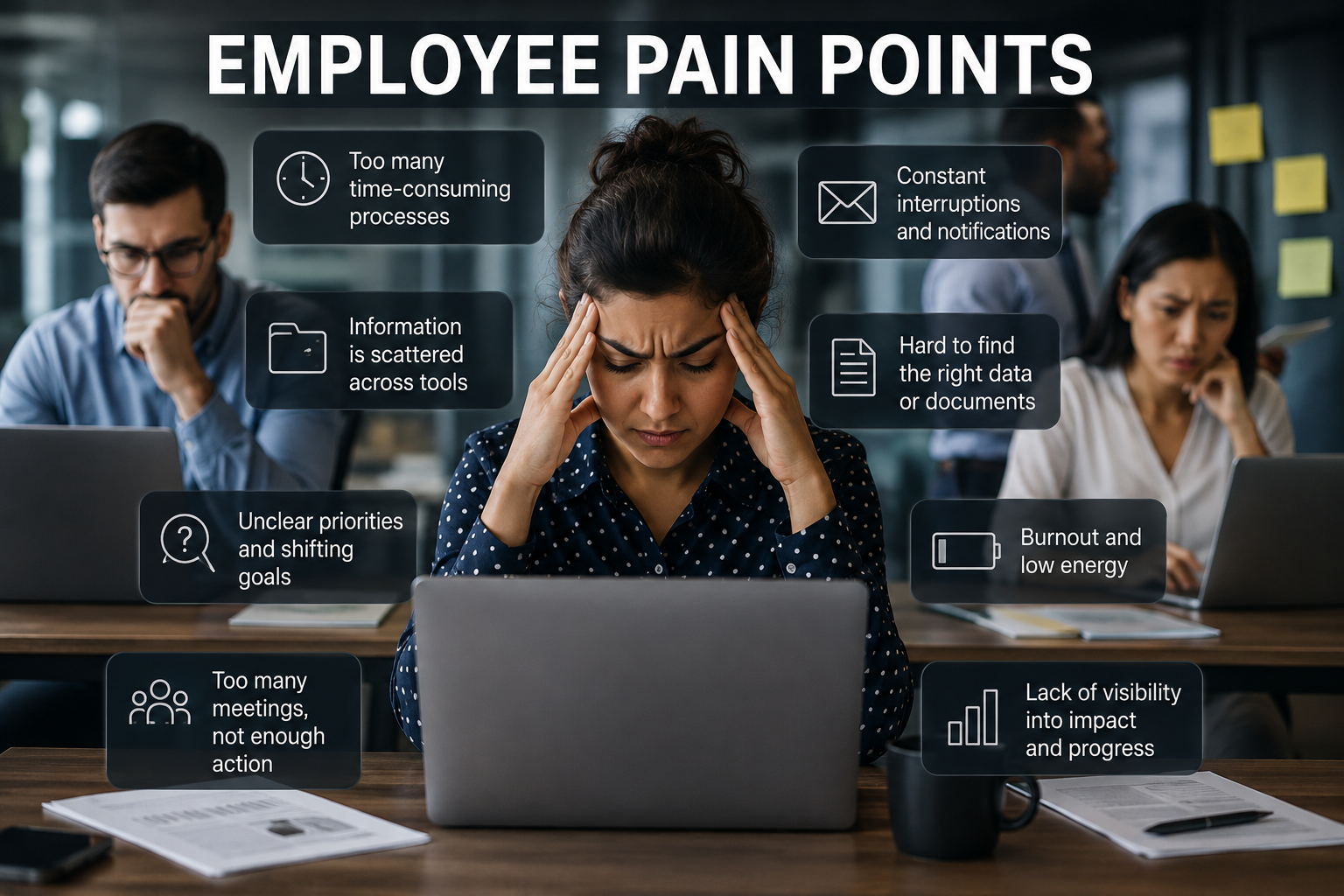
The people doing this work are stretched thin. Most enterprise manufacturing innovation programs are run by small teams — one, two, or three people carrying a mandate that could occupy a department. They are expected to maintain a view of the external technology landscape, manage a pipeline of active evaluations, run governance processes across multiple business units, coordinate pilots with vendors who are not always enterprise-ready, and report results to leadership on a regular basis. Without a platform designed to amplify their capacity, the most common outcome is that the work that gets done is reactive — responding to vendor outreach rather than proactively scouting for what the organization actually needs.
What an Innovation Management Platform Does for Manufacturing Teams
An AI-powered innovation management platform does not replace the judgment of an experienced manufacturing innovation team. It eliminates the work that consumes the time those teams should be spending on judgment.
Technology scouting at scale. Instead of maintaining research subscriptions, attending conferences, and manually tracking vendor lists across spreadsheets, a platform with AI-assisted scouting synthesizes intelligence across thousands of companies in real time. Traction's AI — built on Claude (Anthropic) and AWS Bedrock with a RAG architecture — generates AI Trend Reports and AI Company Snapshots that surface relevant startups and technologies against specific manufacturing requirements. With 50,000 curated Traction Matches and full Crunchbase integration at no extra cost, manufacturing teams have immediate access to an enterprise-ready view of the technology landscape without building it from scratch.
Structured evaluation against manufacturing-specific criteria. The difference between a vendor that looks promising in a demo and a vendor that can actually operate in a multi-site manufacturing environment with OT security requirements is not obvious from a website. A structured evaluation workflow captures the requirements that matter — technical capability, enterprise scalability, cybersecurity posture, implementation timeline, commercial terms — and applies them consistently across every vendor in the pipeline. Traction's configurable evaluation workflows adapt to each team's specific criteria without requiring custom development, ensuring that every evaluation produces comparable, defensible results.
Want to see how Traction AI scouts and evaluates technologies against your specific requirements? Try Traction AI free — no demo call required.
Pilot governance built for manufacturing complexity. A manufacturing pilot is not a software proof of concept. It involves physical systems, operational risk, cross-functional stakeholders from IT, OT, operations, and procurement, and governance requirements that vary by site and business unit. Purpose-built pilot management structures this complexity — setting milestone plans informed by how similar pilots actually ran, detecting stalls before they become failures, generating stakeholder status updates automatically, and capturing structured outcome documentation at closure. The result is a pilot function that produces clear go or no-go decisions rather than ambiguous results that delay the scale commitment.
Portfolio visibility across the innovation program. When every evaluation and pilot is captured in a single system, the manufacturing innovation leader has a real-time view of the full portfolio — what is in the pipeline, what is actively being evaluated, what pilots are running, and what has been scaled or terminated. This is what leadership needs to understand the state of the innovation program, and what the innovation team needs to avoid duplicating evaluations already completed, prioritize the highest-value opportunities, and report results with confidence.
Institutional memory that does not walk out the door. The same problem driving the need for Industry 4.0 technology — experienced people taking their knowledge with them when they leave — exists inside the innovation function itself. When a technology scout or program manager leaves, the evaluations they ran, the vendors they assessed, and the decisions they made should not leave with them. A platform that captures all of this in structured, searchable form ensures that institutional knowledge is an organizational asset, not a personal one.
The Full Innovation Lifecycle for Manufacturing Teams
The most effective manufacturing innovation programs do not treat technology scouting, vendor evaluation, pilot management, and portfolio reporting as separate activities managed in separate tools. They manage the full lifecycle in a single connected system where the output of each stage becomes the input to the next.
From idea and need to scouting brief. Manufacturing innovation often starts with a specific operational problem — a quality control challenge, a maintenance issue, a capacity constraint, a sustainability target. Capturing that need in a structured form — with clear requirements, success criteria, and strategic context — is what allows the scouting process to be targeted rather than exploratory. When the need is documented in the same system where scouting happens, the evaluation criteria that follow are calibrated against what the organization actually needs, not what vendors are currently pitching.
From scouting to a qualified pipeline. AI-assisted scouting against structured requirements produces a shortlist of vendors worth evaluating — not a list of every company that claims to operate in a relevant category. Traction's deduplication capabilities ensure that the same vendor does not appear multiple times across different scouts or business units, and that prior evaluations of a vendor are surfaced automatically before a new evaluation begins.
From evaluation to pilot-ready selection. A structured evaluation process that captures scoring rationale, RFI responses, comparative assessments, and enterprise-readiness signals produces a pilot-ready vendor selection — one where the decision is documented and defensible, and where the pilot success criteria are already defined. This eliminates the most common source of pilot failure: launching a pilot before the organization has agreed on what success looks like.
From pilot to scale decision. A pilot that closes with structured outcome documentation — outcome code, timeline actuals versus plan, key learnings, vendor performance assessment, recommended next step — provides the evidence base for a scale commitment. Leadership can make the scale decision based on documented findings rather than a verbal summary. The institutional knowledge from the pilot feeds back into future evaluations, making every subsequent pilot smarter.
What This Looks Like in Practice
A multi-billion-dollar industrial manufacturer came to Traction facing exactly the challenge described above. Experienced supervisors were retiring, taking with them an intuitive understanding of critical machinery that new employees could not replicate. The manufacturer needed advanced sensor technology and AI-driven analytics capable of creating digital twins of critical equipment — with AI-based simulation to test fixes on digital twins before physical deployment, enterprise-grade scalability across multiple manufacturing sites, and robust OT cybersecurity controls.
Their incumbent vendors could not meet the requirement. Using Traction's AI-powered scouting and evaluation workflows, the innovation team moved beyond traditional vendor lists and opened a pipeline from Silicon Valley and global innovation hubs to identify both emerging startups and established IoT providers. Traction AI accelerated research, enriched vendor profiles, and mapped emerging technologies directly against the manufacturer's specific requirements.
The result: a program the manufacturer planned to complete in twelve months was finished in six. Vendor selection was complete and pilot testing had begun at the halfway point. Evaluation and research costs were reduced by hundreds of thousands of dollars. And the manufacturer was confident enough in the results of the pilot process that they made a venture investment in one of the early-stage technology providers identified through Traction.
What to Look for in an Innovation Management Platform for Manufacturing
Not every innovation management platform is built for the specific requirements of enterprise manufacturing programs. Here is what separates purpose-built platforms from generic alternatives.
AI-native architecture, not AI features bolted on. The difference matters for manufacturing teams dealing with large volumes of technical information across many technology categories. An AI layer built on top of a legacy platform produces incremental improvements to an existing workflow. An AI-native platform built on modern infrastructure — like Traction's architecture on Claude (Anthropic) and AWS Bedrock — uses AI as the intelligence layer for every stage of the innovation process, from scouting to evaluation to pilot governance.
A curated technology database, not just a search interface. Scouting against a raw database of millions of companies produces noise. A curated database of enterprise-ready companies — screened for operational maturity, not just technical capability — produces a qualified pipeline. Traction's 50,000 Traction Matches are curated specifically for enterprise programs, giving manufacturing innovation teams a starting point that reflects enterprise readiness rather than startup activity.
Configurable workflows for manufacturing-specific evaluation criteria. OT security requirements, multi-site scalability criteria, and operational risk thresholds are not standard evaluation categories in a generic platform. Look for configurability that allows the team to define the criteria that matter for their specific manufacturing context without custom development projects.
Pilot management that reflects manufacturing complexity. A pilot management capability designed for software implementations does not map to the governance requirements of a manufacturing pilot. Look for milestone structures that account for OT security reviews, multi-site validation, and cross-functional approval chains — not just task lists and due dates.
No setup charges and no data migration charges. Manufacturing innovation programs that have been running on spreadsheets and point solutions have years of evaluation history and vendor data. A platform that charges for setup or data migration adds friction to adoption and creates a cost barrier that delays time to value. Traction charges neither.
Enterprise security architecture. Manufacturing innovation programs involve sensitive commercial information — vendor capabilities, commercial terms, technical architectures, pilot findings. The platform needs SOC 2 Type II certification, role-based access control, and data governance controls that enterprise IT and procurement require.
FAQ
What is an innovation management platform for manufacturing?
An innovation management platform for manufacturing is a purpose-built enterprise system that helps manufacturing organizations systematically scout emerging technologies, evaluate vendors against operational requirements, manage pilot programs across complex multi-site environments, and capture institutional knowledge from every evaluation and pilot. It replaces fragmented manual processes — spreadsheets, email threads, point tools — with a single connected system that manages the full innovation lifecycle from identified need to scaled deployment.
How is innovation management different in manufacturing versus other industries?
Manufacturing innovation programs face specific challenges that most generic platforms are not designed for: OT cybersecurity requirements that eliminate vendors who pass standard IT security reviews, multi-site complexity that requires evaluation criteria to account for variation across facilities, incumbent vendor limitations that make proactive external scouting essential, and operational risk thresholds that require more structured pilot governance than software proof-of-concept programs typically involve. Purpose-built platforms configured for these requirements produce significantly better outcomes than generic alternatives.
What is Industry 4.0 and why does it require a dedicated innovation management approach?
Industry 4.0 refers to the convergence of IoT, AI-driven analytics, digital twins, advanced robotics, and connected manufacturing systems that is transforming how physical production operates. The technology landscape is vast, evolves rapidly, and involves a large number of emerging vendors alongside established suppliers. Evaluating these technologies systematically — against specific operational requirements, at enterprise scale, with structured pilot governance — requires a platform and process that manual research and general project management tools cannot provide.
How does AI improve technology scouting for manufacturing teams?
AI-powered technology scouting synthesizes intelligence across thousands of companies and research sources in real time, surfacing relevant vendors and technologies against specific manufacturing requirements without the manual research effort that traditional scouting demands. For manufacturing teams operating with limited headcount across many technology categories, AI-assisted scouting is the difference between a reactive vendor pipeline driven by inbound outreach and a proactive pipeline driven by structured requirements.
What should manufacturing teams look for when evaluating innovation management platforms?
The most important evaluation criteria for manufacturing teams are: AI-native architecture that supports scouting, evaluation, and pilot governance; a curated technology database of enterprise-ready companies; configurable workflows that adapt to manufacturing-specific evaluation criteria including OT security and multi-site scalability; pilot management designed for manufacturing complexity; no setup or data migration charges; and enterprise security architecture including SOC 2 certification and role-based access control.
How does pilot management software support manufacturing innovation pilots?
Purpose-built pilot management for manufacturing structures the complexity that general project management tools cannot handle: milestone plans that account for OT security reviews and multi-site validation, stall detection that identifies pilots going quiet before deadlines are formally missed, stakeholder visibility that does not require executive sponsors to log into the platform, and structured outcome documentation at closure that captures what was learned for future programs. This governance structure is what separates pilots that produce clear scale decisions from pilots that produce ambiguous results and delayed commitments.
How does Traction Technology support manufacturing innovation programs?
Traction works with leading manufacturing and industrial organizations including Ford, Bechtel, Suntory, and Armstrong Industries to manage the full innovation lifecycle — from technology scouting and open innovation through structured evaluation, pilot governance, and portfolio reporting — in a single connected platform. Traction's AI-native architecture, 50,000 curated Traction Matches, full Crunchbase integration, and configurable workflows give manufacturing innovation teams the capacity and structure to run enterprise-scale programs without enterprise-scale headcount.
About Traction Technology
Traction Technology is an AI-powered innovation management software platform trusted by Fortune 500 enterprise innovation teams including Armstrong, Bechtel, Ford, GSK, Kyndryl, Merck, and Suntory. Built on Claude (Anthropic) and AWS Bedrock with a RAG architecture, Traction manages the full innovation lifecycle — from technology scouting ( one million plus companies ) and open innovation through idea management, RFI management, and pilot management — with AI-generated Trend Reports, AI Company Snapshots, duplication detection, and decision coaching built in.
One annual subscription at $4,000 gives you the full capabilities of an enterprise innovation team — every module, every AI capability, and unlimited View-Only access for every stakeholder at no additional cost. No setup fee. No data migration charges. Featured in the Gartner Market Guide for AI-Enabled Innovation Management Platforms, February 2026. SOC 2 Type II certified.
Try Traction AI Free · View Pricing · Schedule a Demo · tractiontechnology.com
About the Author
Neal Silverman is the Co-Founder and CEO of Traction. He has spent 25 years watching large enterprises struggle to collaborate effectively with startup ecosystems — not because the technologies aren't promising, but because most startups aren't ready to meet the demands of enterprise scale. Before Traction, he spent 15 years producing the DEMO Conference for IDG, where he evaluated thousands of early-stage companies and watched the best ideas stall at the enterprise door. That problem became Traction. Today he works with innovation teams at GSK, PepsiCo, Ford, Merck, Suntory, Bechtel, USPS, and others to help them institutionalize open innovation programs and build the infrastructure to scout, evaluate, and scale emerging technologies. Connect with Neal on LinkedIn.






.webp)