
Harnessing Proprietary Data: How RAG Secures and Grounds LLM Insights for Enterprise Innovation
Introduction: The Trust Crisis in Enterprise AI
Large Language Models (LLMs) have transformed how innovation teams research technologies, evaluate vendors, and analyze trends. What once required manual review of thousands of documents—from startup profiles to internal R&D reports—can now be synthesized instantly.
But this new power introduces a dangerous risk: hallucination.
In high-stakes enterprise decisions—vendor selection, M&A diligence, pilot evaluation—an LLM that “sounds confident but is wrong” is unacceptable. Innovation leaders cannot afford decisions grounded in guesswork.
This is why grounding is now a non-negotiable requirement for enterprise AI. Grounding forces an LLM to cite specific, verifiable sources—especially your secure, proprietary data—before generating an answer.
The leading architecture that enables this is Retrieval-Augmented Generation (RAG). RAG bridges the gap between the general intelligence of large models and the private knowledge your enterprise relies on.
This guide explains how RAG works, why it is critical for secure innovation scouting, and how Traction AI delivers an enterprise-ready RAG pipeline out of the box.
Why RAG Is the Foundation of Secure Enterprise LLM Adoption
To understand RAG, imagine asking a brilliant generalist to write a report—but requiring them to use only your private company library and cite every source.
That is exactly what RAG does.
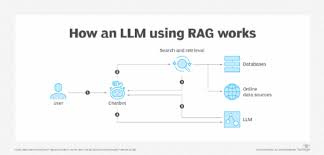
How RAG Works (3 Steps)
1. Retrieval
A user submits a query (e.g., “What risks were identified in last year’s Vendor X security audit?”).
The system retrieves the most relevant internal documents—compliance audits, past evaluations, R&D notes—from your secure knowledge base.
2. Augmentation
Those retrieved excerpts are inserted directly into the LLM prompt.
3. Generation
The LLM produces an answer grounded only in those verified documents, minimizing hallucination and maximizing enterprise-specific relevance.
Innovation Use Cases: Where RAG Creates Enterprise Value
1. Secure Technology Scouting
When your team asks about an emerging startup, RAG ensures the AI uses:
- your past evaluations
- compliance notes
- internal assessments
- team feedback
…not general web content.
This produces insights no generic LLM can replicate.
2. Automated Due Diligence (RFI/RFP Support)
RAG grounds AI-generated summaries and responses in:
- your procurement policies
- your technical requirements
- your compliance frameworks
This ensures accuracy, consistency, and auditability.
3. KPI Tracking and Innovation ROI
RAG enables AI to analyze:
- pilot success rates
- time-to-market metrics
- cost savings
- risk scores
This transforms subjective reporting into traceable, data-driven analysis.
Traction AI: Enterprise-Grade RAG, Fully Managed
Building a secure RAG pipeline in-house requires vector databases, model orchestration, retrieval optimization, monitoring, governance, and strict access controls.
Traction AI simplifies all of that.
Unified Knowledge Base
Traction eliminates data silos by centralizing:
- evaluations
- documents
- vendor communications
- R&D reports
- pilot results
This becomes the single source of truth for your RAG engine.
Role-Based Access Control (RBAC)
Not every user should have access to every document—and RAG must respect that.
Traction AI enforces RBAC during the retrieval phase, ensuring:
- AI can only ground responses in documents the querying user is authorized to view
- restricted R&D or M&A files never appear in outputs
This addresses the core security concern enterprises face with AI.
The Future of Auditable Innovation
RAG is not just a technical pattern—it is the future of trustworthy enterprise AI.
For innovation teams, a RAG-powered platform enables:
- secure technology scouting
- grounded vendor evaluation
- consistent due diligence
- transparent KPI measurement
- scalable innovation workflows
With Traction AI, enterprises gain a secure, compliant, auditable system that transforms AI from a research toy into a mission-critical decision engine.
Try Traction AI — Your Secure RAG Platform for Innovation
Ready to move beyond hallucinations and experience grounded, enterprise-grade AI?
Take a free test drive of Traction AI to see how secure RAG-powered technology scouting works in practice.
Innovation Management and Technology Scouting with Traction AI
Key Features & Benefits:
With our platform, innovation teams can:
- 🔍 Scout and evaluate emerging technologies in minutes
- 📊 Access AI-powered insights to make data-driven decisions
- 🤝 Collaborate seamlessly across teams and business units
- 🚀 Accelerate pilots and scale solutions that drive real business impact
👉 New: Experience Traction AI with a Free Test Drive — no scheduling a demo required.
Try Traction AI for Free →
Or, if you prefer a guided experience:
Book a Personalized Demo →
Related Resources:
Technology Trends to Watch in 2026
Awards and Industry Recognition
Recognized by Gartner as a leading Innovation Management Platform, Technology helps large enterprises drive digital transformation by streamlining the discovery and management of new technologies and emerging startups. Our platform, built for the needs of Fortune 500 companies, helps you save time, reduce risk, and accelerate your path to innovation.
See what our customer are saying on G2:

By accelerating technology discovery and evaluation, Traction Technology delivers a faster time-to-innovation and supports revenue-generating digital transformation initiatives.






.webp)