
Top 10 Technology Trends to Watch in 2026 — and the Startups Leading the Way
As 2026 approaches, enterprise innovation leaders are preparing for another transformative year. Emerging technologies — from generative AI to climate tech — are not just reshaping industries, but defining new competitive advantages.
Below are the ten technology trends to watch in 2026, each paired with a standout startup that exemplifies how these innovations are being put into practice today.
1. Generative AI and Foundation Models
Trend: The generative AI wave continues to expand, with large language models (LLMs), multimodal systems, and fine-tuned foundation models becoming deeply embedded in enterprise operations.
Startup to Watch: Cohere – enabling enterprises to build and deploy custom AI models safely and efficiently.
Why it matters: Generative AI is transforming productivity, product design, and decision-making. Organizations that operationalize AI responsibly will lead the next phase of digital transformation.
Enterprise action: Start with targeted pilots in content automation, knowledge management, or customer service, and establish governance frameworks for scale.
2. Edge AI and Real-Time Intelligence
Trend: The shift to localized, on-device AI processing (Edge AI) is revolutionizing how data is analyzed and acted upon — enabling faster, safer, and more efficient operations.
Startup to Watch: Edge Impulse – powering machine learning at the edge for industrial, automotive, and healthcare applications.
Why it matters: Edge AI reduces latency, improves data privacy, and allows real-time automation without constant cloud dependency.
Enterprise action: Pilot edge intelligence for predictive maintenance, real-time monitoring, or adaptive production systems.
3. Robotics 2.0 and Smart Automation
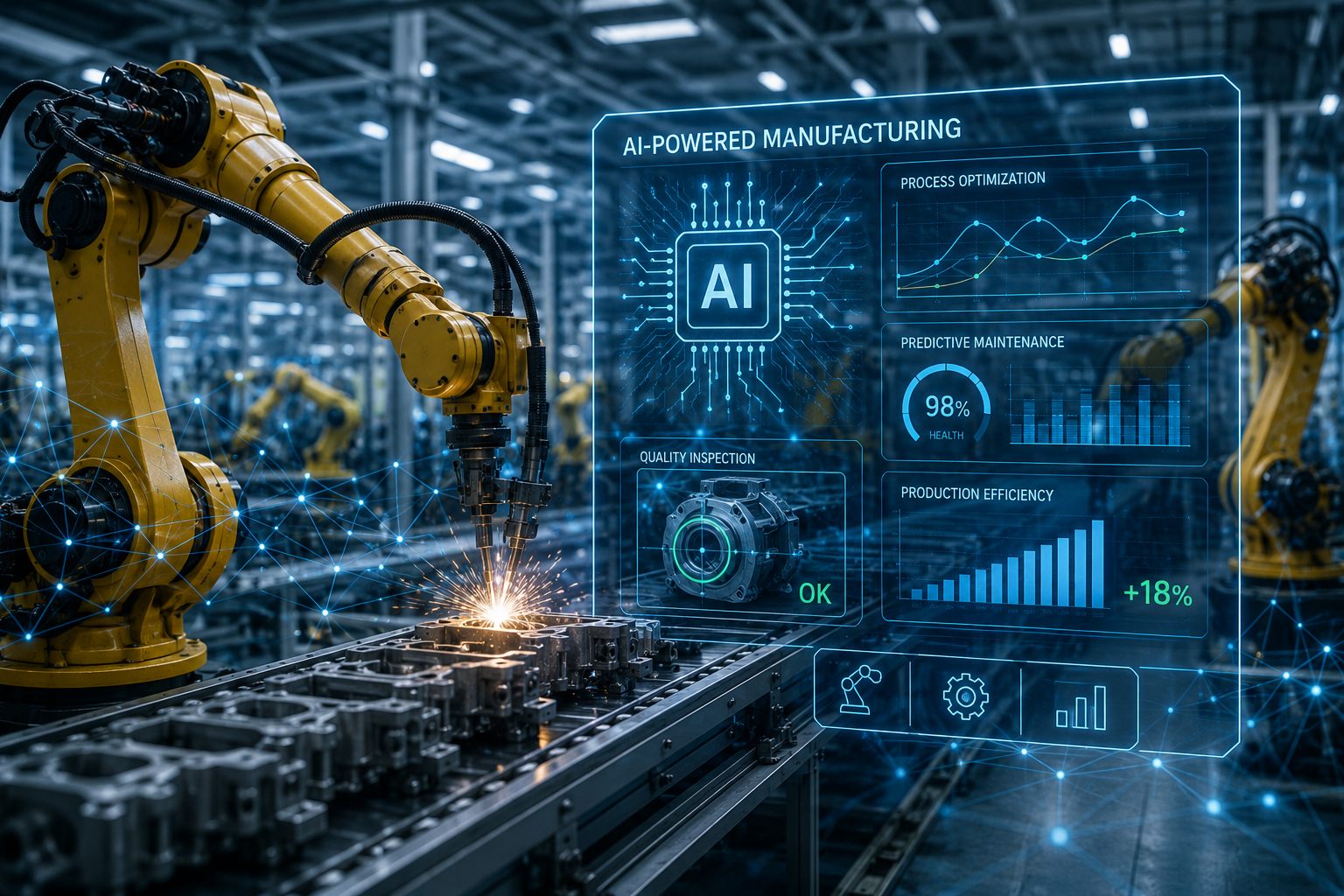
Trend: AI-driven robotics, collaborative robots (cobots), and flexible automation are redefining how manufacturing and logistics operate at scale.
Startup to Watch: Bright Machines – combining robotics and computer vision to automate complex assembly and inspection tasks.
Why it matters: Robotics 2.0 offers scalability, efficiency, and safety across industries from electronics to e-commerce fulfillment.
Enterprise action: Begin with modular, flexible automation pilots integrated into existing production lines.
4. Digital Twins and Simulation Platforms
Trend: Digital twins are evolving into dynamic systems that simulate real-time operations, helping enterprises visualize, test, and optimize performance before physical execution.
Startup to Watch: Oqton – offering an open industrial platform that unifies manufacturing data and simulation.
Why it matters: Digital twins reduce operational risk, speed up innovation cycles, and improve asset utilization.
Enterprise action: Deploy digital twin pilots on key assets and integrate IoT data streams to enhance accuracy and insight.
5. Additive Manufacturing and Advanced Materials
Trend: 3D printing and hybrid manufacturing are moving beyond prototyping toward scalable production, supported by breakthroughs in materials science.
Startup to Watch: Velo3D – enabling complex metal additive manufacturing for aerospace and energy sectors.
Why it matters: Additive manufacturing allows faster iteration, on-demand production, and localized supply chains.
Enterprise action: Identify parts with high customization potential or long lead times for additive manufacturing trials.
👉 Try Traction AI free — scout emerging technologies and generate trend reports, no demo call required
6. Privacy-Enhancing Computation and Responsible AI
Trend: As AI adoption expands, enterprises are turning to privacy-enhancing technologies (PETs) such as federated learning and differential privacy to ensure compliance and trust.
Startup to Watch: Duality Technologies – delivering advanced cryptography for secure collaborative analytics.
Why it matters: PETs enable data sharing and AI training across silos without exposing sensitive information.
Enterprise action: Incorporate PETs into AI workflows, especially in regulated sectors like healthcare and finance.
7. Supply Chain Intelligence and Autonomous Logistics
Trend: Intelligent supply chain systems now combine predictive analytics, autonomous logistics, and generative AI to improve resilience and transparency.
Startup to Watch: Altana – building the “shared map of the global supply chain” to enhance visibility and risk management.
Why it matters: Real-time supply chain intelligence reduces disruptions and optimizes planning.
Enterprise action: Pilot AI-powered forecasting tools and explore automation for last-mile delivery.
8. Climate Tech and Sustainable Operations
Trend: Climate technology is shifting from aspiration to action, with startups focusing on emissions monitoring, carbon capture, and energy optimization.
Startup to Watch: Twelve – turning captured CO₂ into sustainable chemicals and fuels.
Why it matters: Sustainability is now a business imperative, with measurable ROI through efficiency gains and brand leadership.
Enterprise action: Partner with startups developing circular materials, low-carbon processes, or AI-driven sustainability platforms.
9. Bio-Innovation and Biomanufacturing
Trend: The convergence of biology and manufacturing is enabling new sustainable materials, food systems, and pharmaceuticals.
Startup to Watch: Checkerspot – engineering algae to create high-performance, bio-based materials.
Why it matters: Biomanufacturing unlocks renewable, carbon-neutral production pathways and innovative new product categories.
Enterprise action: Explore pilot partnerships in bio-based inputs or materials aligned with your sustainability roadmap.
10. AI-Driven Cybersecurity and Resilience
Trend: Cybersecurity systems powered by AI are becoming essential for defending complex IT and OT environments against rapidly evolving threats.
Startup to Watch: HiddenLayer – protecting machine learning models and AI infrastructure from emerging attack vectors.
Why it matters: As digital and physical systems converge, intelligent defense mechanisms are critical for enterprise resilience.
Enterprise action: Integrate AI-based threat detection and incident response tools across IT and operational technology environments.
How to Act on These 2026 Technology Trends
- Link innovation to impact: Prioritize technologies that clearly support your business goals.
- Run measurable pilots: Define KPIs for cost, time, and performance improvements.
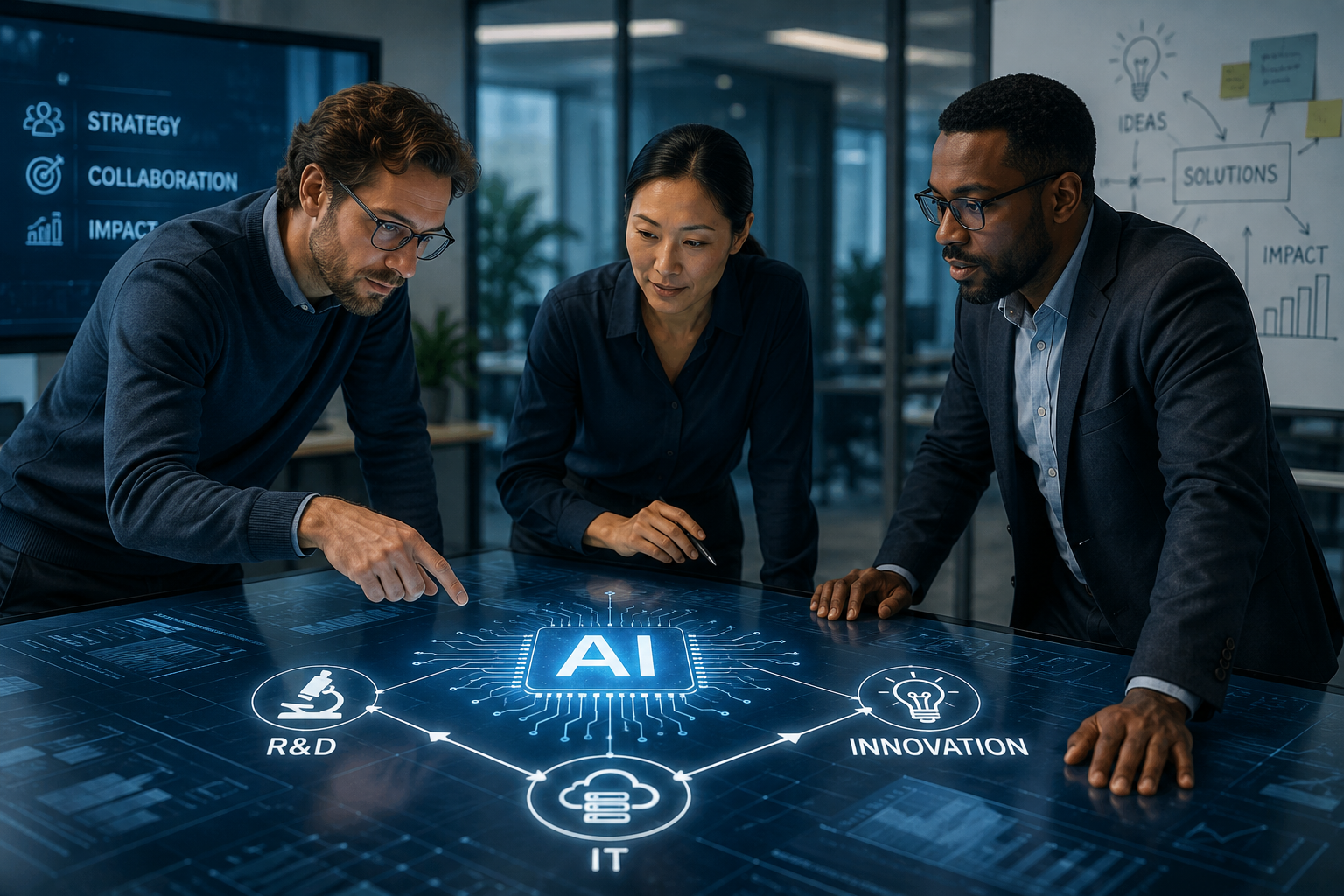
- Build cross-functional alignment: Engage IT, innovation, and business teams early.
- Adopt a platform approach: Use tools like Traction AI to scout startups, capture employee ideas, and manage pilot programs effectively.
Final Thought — From Trends to Traction
The difference between following trends and leading innovation lies in execution.
As 2026 approaches, enterprises that capture internal ideas, scout emerging startups, and scale successful pilots will set the pace for their industries.
How Traction AI Surfaces Technology Trends Like These
The ten trends above represent a fraction of the emerging technology landscape enterprise innovation teams are monitoring in 2026. Tracking these categories manually — across startup databases, funding announcements, patent filings, and industry publications — is beyond the capacity of any internal team.
Traction AI enables conversational technology scouting across any category — generative AI, climate tech, advanced manufacturing, digital health, supply chain intelligence — surfacing relevant vendors, funding signals, and market trends in minutes rather than weeks. No boolean searches. No manual filtering. No analyst subscriptions required.
👉 Try Traction AI free — technology scouting and trend reports, no demo call required
Related Reading
- How AI Is Transforming Technology Scouting: A Practical Guide for Enterprise Teams
- What Is an Innovation Management Framework? A Practical Guide for Enterprise Teams
- From Scouting to Scale: How Innovation Teams Evaluate Emerging Technologies
- Why Enterprise AI Adoption Is Stuck in Procurement — And How Innovation Teams Get Unstuck
- Traction Technology Featured in Gartner's 2026 Report on AI-Enabled Innovation Management Platforms
- What Is Innovation Management? A Practical Definition for Enterprise Teams
About Traction Technology
Traction Technology is an AI-powered innovation management software platform trusted by Fortune 500 enterprise innovation teams. Built on Claude (Anthropic) and AWS Bedrock with a RAG architecture, Traction manages the full innovation lifecycle — from technology scouting and open innovation through idea management and pilot management — with AI-generated Trend Reports, AI Company Snapshots, automatic deduplication, and decision coaching built in.
Traction AI enables unlimited vendor discovery through conversational AI scouting — no boolean searches, no manual filtering, no analyst hours. With 50,000 curated Traction Matches plus full Crunchbase integration at no extra cost, zero setup fees, zero data migration charges, full API integrations, and deep configurability for each customer's unique workflows, Traction's innovation management platform gives enterprise innovation teams the intelligence and execution capability to turn innovation into measurable business outcomes. Featured in the Gartner Market Guide for AI-Enabled Innovation Management Platforms, February 2026. SOC 2 Type II certified.
Try Traction AI Free · Schedule a Demo · Start a Free Trial · tractiontechnology.com






.webp)