
Kicking Off 2026 with the Traction Score: A New Standard for Enterprise Technology Readiness
As we head into 2026, enterprise teams are facing an unprecedented volume of emerging technologies—especially in AI, automation, and data-driven platforms. The challenge is no longer finding innovation. It’s deciding which technologies are actually ready to operate inside a large enterprise.
Innovation teams now evaluate hundreds of startups and new solutions every year. Yet most evaluation processes still rely on a mix of vendor claims, slide decks, and fragmented research. Security reviews often happen late. Scalability assumptions go untested. Risk only becomes visible after time, budget, and internal credibility have already been spent.
That gap—between early promise and enterprise reality—is where innovation efforts most often break down.
That’s the problem we set out to solve as we kick off 2026.
Introducing the Traction Score™
As we start the year, we’re introducing the Traction Score™—a standardized score designed to help senior IT, Corp Venture and Innovation leaders assess how ready an early stage technology vendor is to operate inside a large, complex enterprise.
By enterprise readiness, we mean how prepared a technology solution is to operate securely, reliably, and at scale within an enterprise environment.
The Traction Score reflects the realities of enterprise adoption—not marketing momentum, funding headlines, or future vision alone.
In short, it is a conservative, evidence-based measure of how ready a vendor is to operate inside an enterprise—not how exciting the technology sounds.
What Enterprise Technology Readiness Really Means
Enterprise readiness is rarely about features alone.
Technologies fail to scale inside large organizations because of security gaps, operational complexity, unclear ownership, or vendor instability—not because the underlying idea was weak.
The Traction Score evaluates vendors across six factors that consistently determine success or failure inside enterprise environments:
- Security & Compliance – Governance, data protection, and regulatory readiness
- Scalability – Ability to support multi-team, multi-region deployments
- Market Validation – Evidence of real-world enterprise adoption
- Financial Stability – Durability through long buying and deployment cycles
- Product & Technology Maturity – Reliability, integrations, and applied AI maturity
- Operational & Execution Risk – Dependencies or constraints that could derail adoption
Each factor is assessed conservatively and normalized so early-stage and mature vendors can be compared fairly.
What the Traction Score Is Not
The Traction Score is intentionally not:
- A popularity ranking
- A funding or growth leaderboard
- A prediction of future success
- A replacement for detailed technical or security due diligence
It is a decision-support framework, designed to reduce risk and align stakeholders earlier in the evaluation process.
Enterprise technology decisions are conservative by necessity.
The Traction Score reflects how enterprises actually buy, deploy, and operate technology.
Why We’re Launching This Now — and Why Traction Technology
Over the past decade, working closely with enterprise innovation, IT, and corporate venture teams, we’ve seen the same challenge repeat itself.
Different stakeholders evaluate vendors using different criteria, at different times, with different assumptions.
Security teams focus on risk.
Architecture teams focus on scale.
Innovation teams focus on potential.
Procurement teams focus on durability.
After evaluating thousands of startups and emerging technologies alongside enterprise customers, it became clear that teams needed a shared, objective standard—one grounded in how decisions are actually made once a technology moves beyond the pitch.
The Traction Score brings these perspectives together, enabling teams to move faster without increasing risk.
How Enterprise Teams Use the Traction Score
As we move into 2026, enterprise teams are using the Traction Score to:
- Shortlist vendors before deep security and architecture reviews
- Compare emerging vendors against established platforms
- Support internal decision-making and procurement justification
- Evaluate large portfolios of technologies consistently
It creates a common language for vendor evaluation across IT, innovation, security, and business teams.
Looking Ahead to 2026
The pace of emerging technology adoption will only accelerate in the year ahead. Without a consistent way to assess enterprise technology readiness, organizations risk slowing innovation—or scaling the wrong vendors.
The Traction Score is now integrated into Traction AI vendor profiles and evaluation workflows, helping teams make better decisions earlier—before risk compounds.
Enterprise innovation rarely fails because of a lack of ideas.
It fails because of misaligned expectations and unmanaged risk.
As we kick off 2026, the Traction Score is our way of bringing more clarity, discipline, and confidence to enterprise technology decisions.
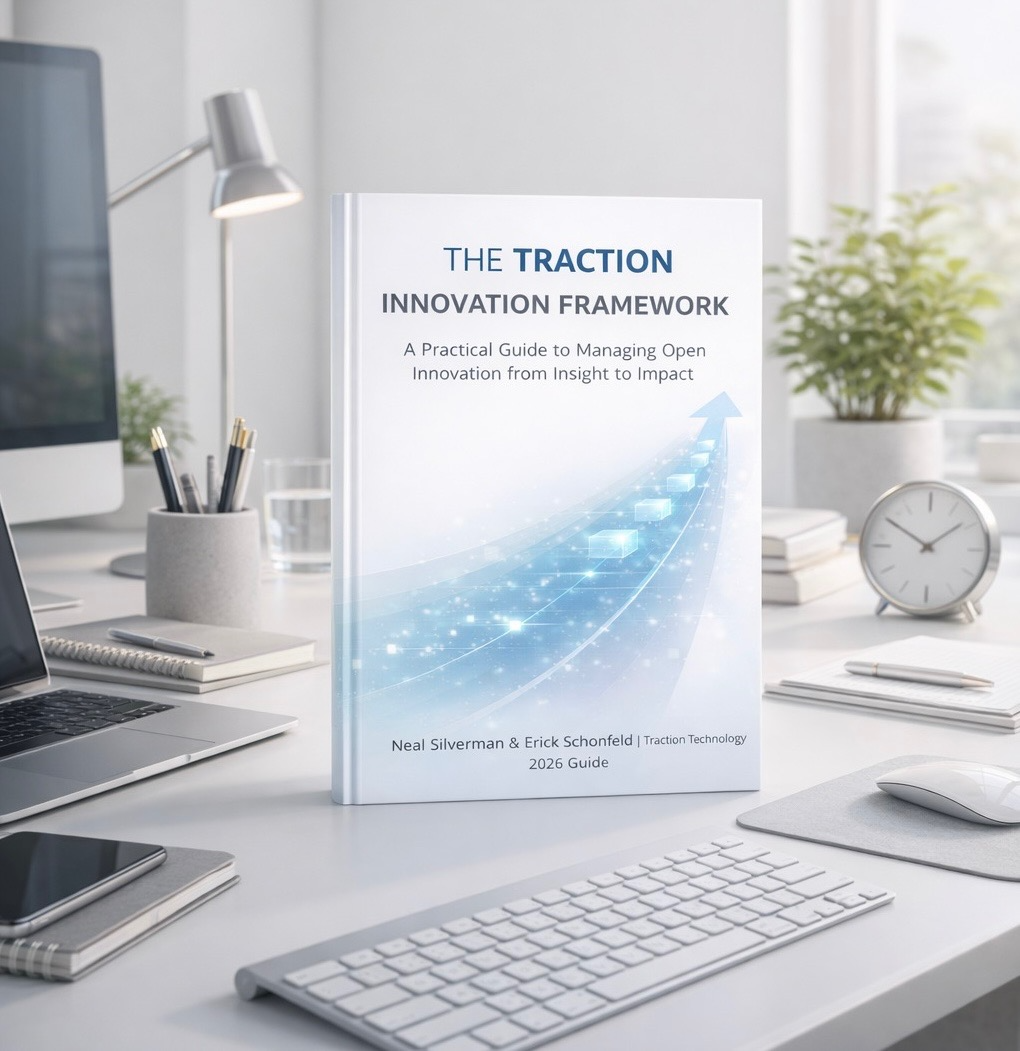
The Traction Score™ helps teams assess readiness. Managing innovation at scale requires structure beyond scoring alone. That system is outlined in the Traction Innovation Framework, which connects readiness, evaluation, and scale into a repeatable operating model.
👉 Explore the Innovation Framework →
About Traction Technology
Traction Technology helps enterprise innovation, IT, and digital teams discover, evaluate, and scale emerging technologies with greater confidence.
Recognized by Gartner as a leading Innovation Management Platform, Traction supports Fortune 500 companies by bringing structure, clarity, and discipline to how new technologies and startups are evaluated—helping teams save time, reduce risk, and move from discovery to enterprise adoption faster.
The Traction Score is now integrated directly into Traction AI, enabling teams to assess enterprise readiness earlier in the evaluation process.
→ Explore the Traction Score inside Traction AI (free test, no sales calls)
What Enterprise Teams Use Traction For
- Discover and evaluate emerging technologies and startups
- Apply consistent, risk-aware evaluation criteria
- Align innovation, IT, security, and procurement teams
- Accelerate pilots and scale solutions with confidence
What Customers Say
“By supporting the full innovation lifecycle—from discovery through execution—Traction Technology helps us move faster and more confidently from insight to impact.”
— CIO, Fortune 100 company







.webp)